

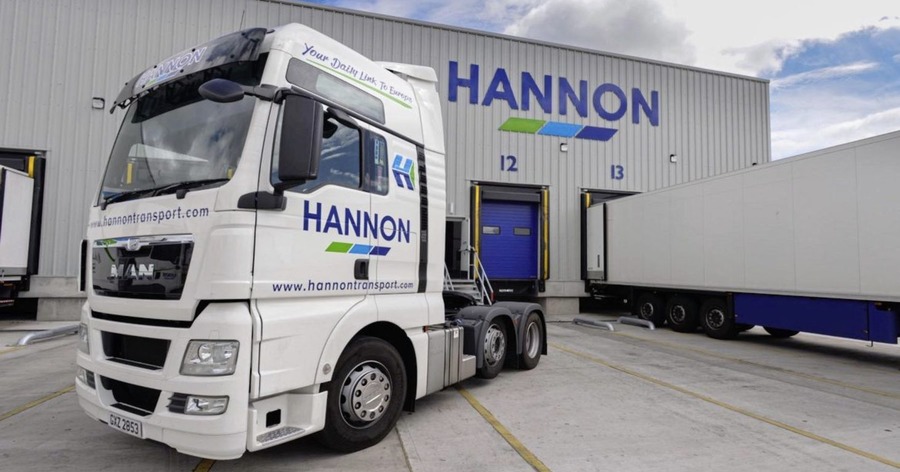
HANNON Transport in Co Armagh has opened a Paris distribution hub right in the heart of the world-famous Rungis International Market in a move it says will further Brexit-proof the business.
It comes as a survey by KPMG has found that complying with new customs and tariff regulations once the transition period ends is the biggest Brexit worry for Northern Ireland businesses.
Managed by Liam Mundow, who is a fluent French speaker, Hannon Transport will initially have two people permanently on site but hope to grow this number
The Rungis market, five miles south of Paris, is the world’s largest fresh produce market, with more than 1,200 companies turning over more than €9 billion a year and reaching 18 million consumers.
“We are offering a daily service from Rungis to anywhere in Ireland for both chilled and frozen food produce, horticultural items, fresh cut flowers and dry freight,” said Hannon marketing manager Owen McLaughlin.
“We can accommodate either full-loads or groupage orders from as little as one pallet. Typical delivery is within 48 hours with all loads carried on our own equipment with full traceability.
“Rungis Market also offers an unparalleled range of logistics services linking it to suppliers right across Europe, and it allows us to link local businesses with many more suppliers from across France, Italy, Spain and Portugal, who deliver there daily.”
He added: “We are the first logistics company in Northern Ireland to set up in Rungis, which offers an unparalleled range of logistics services.
“Equipped with enormous warehouses and a rail terminal, the national wholesale market develops last mile logistics solutions as part of a sustainable strategy.”
In the KPMG survey, 48 per cent of participants said they are concerned about the new customs compliance and tariff issues which will be introduced in Northern Ireland from January 1, given that their importing and/or exporting activities haven’t previously been subject to customs.
Changes to the VAT rules in goods (19 per cent) and uncertainty around continuing access to EU Free Trade Agreements (17 per cent) also represented significant headaches for some companies who took part in KPMG’s recent webinar ‘Preparing for VAT and Customs Changes’.
On their Brexit preparedness, 27 per cent said they are awaiting further clarity around how the Northern Ireland Protocol will apply before commencing any Brexit preparations while just under half (48 per cent) have at least begun basic preparations such as setting up Brexit working groups and reviewing supply chains.
A quarter of companies said they had advanced preparations in place ahead of the end of the transition period on December 31, including discussions with custom intermediaries and were considering the implications of Free Trade Agreements.
Some 41 per cent are unsure how they will deal with customs clearance administration from January. Of those that do know, a quarter expect to outsource customs clearance to a third party or freight forwarder, 25 per cent plan to bring the declarations filings in-house while the remaining 14 per cent were still unsure whether new import and export entry requirements would be applicable to them.
Johnny Hanna, partner in charge of KPMG, said: “While there is still the possibility that some type of technical extension to the transition period might be agreed at the 11th hour, if a deal is on the table, it’s essential that Northern Ireland businesses carry out as much planning and operational readiness as possible before January 1, notwithstanding the fact that several key issues concerning operational aspects of the NI Protocol are still to be clarified.”
