

Text size
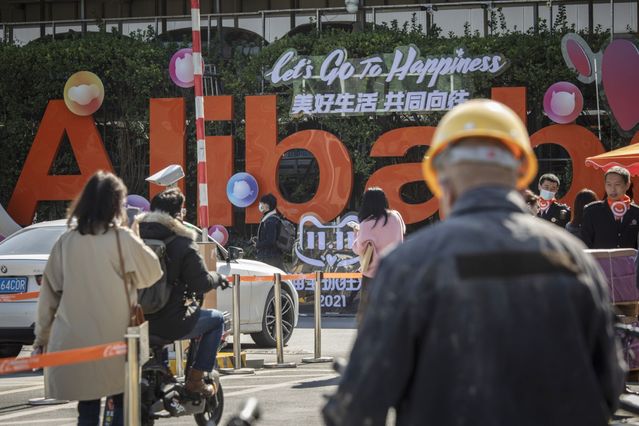
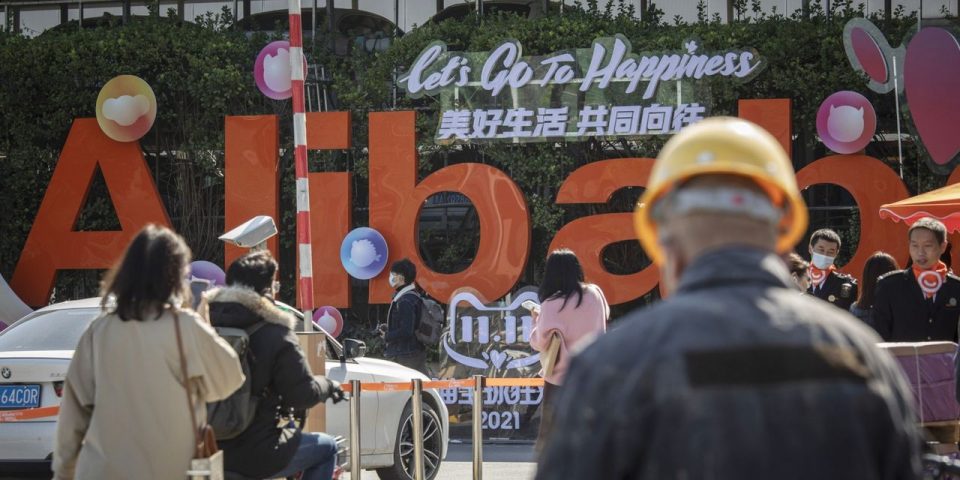
Regulatory concerns have dogged Alibaba and its peers for more than a year now.
Qilai Shen/Bloomberg
A move from regulators to name foreign companies that may face delisting if they don’t comply with U.S. accounting standards has rattled some Chinese stocks. There is reason to believe more of the same announcements are coming.
The Russian invasion of Ukraine has, justifiably, dominated the market in the past few weeks. Investors would be forgiven for overlooking embattled Chinese stocks like Alibaba Group Holding. But they can’t any longer.
Chinese stocks, and the tech sector in particular, are back under pressure. In focus are fears around delisting in the U.S., which is a theme that battered shares of
Alibaba
(ticker: BABA) and its peers like
JD.com
(JD) and
Tencent
(0700.H.K.) late last year.
The Securities and Exchange Commission has announced that five Chinese companies—
BeiGene
(BGNE),
Yum China
(YUMC),
Zai Lab
(ZLAB),
ACM Research
(ACMR), and
Hutchmed
(HCM)—may be delisted if they don’t meet U.S. accounting standards.
It’s the latest installment in applying the Holding Foreign Companies Accountable Act, which became law in late 2020 and requires some foreign companies to be more transparent in making accounting documents available. Chinese companies are among the main targets, and delisting is the ultimate cost of noncompliance.
Stocks beyond just those five mentioned by the SEC fell on Thursday. Investors in Chinese companies have long looked at this law as a risk, and the regulator’s announcement was a harsh reminder of it.
Citi analyst Alicia Yap maintained that the SEC update isn’t new news, and that the threat of having to ditch New York exchanges remains years away.
Other market participants believe further announcements from the SEC that specifically name companies slated for delisting are on the way. These optics could hurt share prices in the short term.
Noting that the SEC news wasn’t unexpected, a team at UBS Global Wealth Management led by Chief Investment Officer Mark Haefele said Friday that more announcements are likely coming.
“We think the five companies were not singled out by the SEC, but were named as they were the first U.S.-listed Chinese companies to have filed their 2021 annual reports,” the group at UBS said. “We can expect more companies to be named in the coming weeks.”
But there is reason for optimism. UBS views U.S. and Chinese regulators as likely to work out an agreement on auditing disclosures this year. Even if this fails, these companies are likely to opt for secondary or dual listings in Hong Kong.
“We do not expect a material valuation discount if the companies move their primary listing location from the U.S. to HK,” Haefele’s team said, “because the stocks’ valuations would likely still be driven by the companies’ valuation and earnings prospects, which are predominantly derived in China and therefore largely unaffected by this development.”
This view is shared by John Zolidis, the president of investment research and wealth management firm Quo Vadis Capital.
“The value of a company is based on its future earnings and cash flows, adjusted for its assets and liabilities (the balance sheet), and discounted for each business’ risk profile and the time horizon to produce expected earnings and cash flow,” Zolidis said in a note on Friday. “The location of the exchange where the shares trade does not figure into this calculation (provided liquidity and investor safeguards are roughly equivalent).”
Quo Vadis Capital’s position is that the situation is a negotiation involving the intersecting interests of U.S. regulators, Chinese regulators, and Chinese companies—many of which count American shareholders among their public owners.
“In our view, there is enough common ground and shared interest here to support a compromise resolution,” Zolidis said. “Accordingly, we see a compromise being reached that serves regulators in both markets and maintains existing U.S. listings for the vast majority of Chinese companies.”
Alibaba stock fell 5.5% in Hong Kong on Friday. The company’s U.S.-listed stock fell 3.2%, after a 7.9% tumble on Thursday. Hong Kong’s
Hang Seng Index
was weighed down by pressure on the tech sector, slipping 1.6%, with the
Hang Seng Tech Index
4.3% lower.
Write to Jack Denton at [email protected]
Corrections & amplifications
Alicia Yap is a Citi analyst. An earlier version of this article incorrectly identified her as Alice.
