

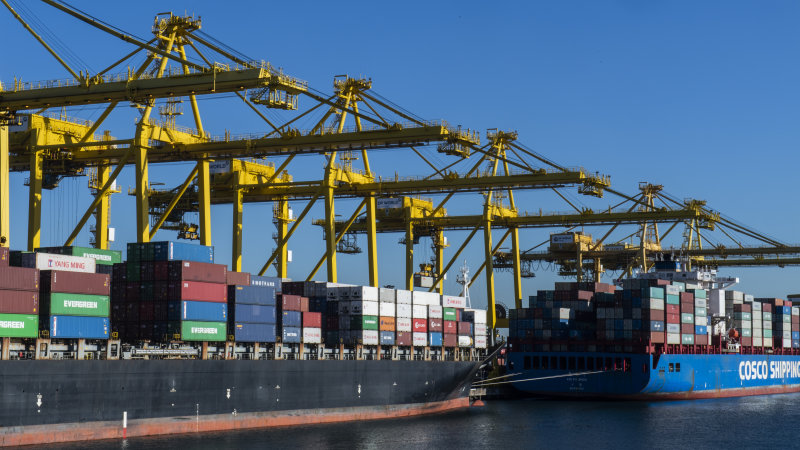
Maersk would also be calling competitor DP World, he warned, which would see an immediate loss to the company of 100,000 lifts a year.
“Everyone needs to understand that the ongoing uncertainty and disruption of service, will ultimately result in more pressure on our business,” he said.
“The industrial action is not only harming Patrick, its detrimental impacts are being felt throughout the industry’s supply chains, damaging already vulnerable businesses at a time of plummeting GDP, deflation, and the announcement of Australia’s first recession in 30 years.”
A protected go-slow at Hutchison, which is also subject to a ban on ships outsourced by other contractors, has resulted in a six-day delay for a ship that arrived on Saturday.
Meanwhile, DP World, which is reporting “back to back” business at its Sydney terminal, has seen overtime bans return as it negotiates terminal-level agreements with the union.
The Maritime Union of Australia is taking the action in response to Patrick’s bid to cut some 50 pages of conditions out of its agreement and on Thursday notified further work bans at Port Botany and new four-hour stoppages in Brisbane on Friday and next week.
MUA national secretary Paddy Crumlin dismissed the delays reported by Shipping Australia as “absurd, evidence-free claims about the waterfront bargaining currently underway”.
“Their latest hysterics attempt to create fear in the general public in a destructive effort to exploit COVID anxiety already in the community for their blatant self interest,” she said.
“There is no evidence that the limited, completely legal forms of industrial actions are causing the ridiculous delays claimed.”
He also rejected Patrick’s suggestion Maersk would shift its work to DP World as “equally ludicrous”.
However, Shipping Australia said the action was creating a “grave crisis” for supply chains that would only get worse and warned it could bring the industry to a standstill.
Empty container boxes that needed to be sent back to Asia were also “building up to crisis levels” as a result of the industrial action, it said in a statement, with one ship set to evacuate the boxes this week forced to leave hundreds behind.
Freight & Trade Alliance chief executive Paul Zalai said the congestions surcharges would see grain exporters absorb an extra $17 per tonne of direct costs.
That kind of extra cost would make “product uncompetitive in a global market and [was] a devastating blow for an industry that already has locked in negotiated contracts with their overseas buyers”, he warned.
Fletcher International Exports founder Roger Fletcher said airfreight restrictions meant sea freight was even more vital during the pandemic and called on the government to intervene.
“At a time when regional Australia’s farmers have the chance to bounce back after years of crippling drought and devastating bushfires, they are being held over a barrel by a few hundred waterfront workers,” he said.
“This should not and cannot be allowed to happen and for the government, it is time to act – no excuses!”
