

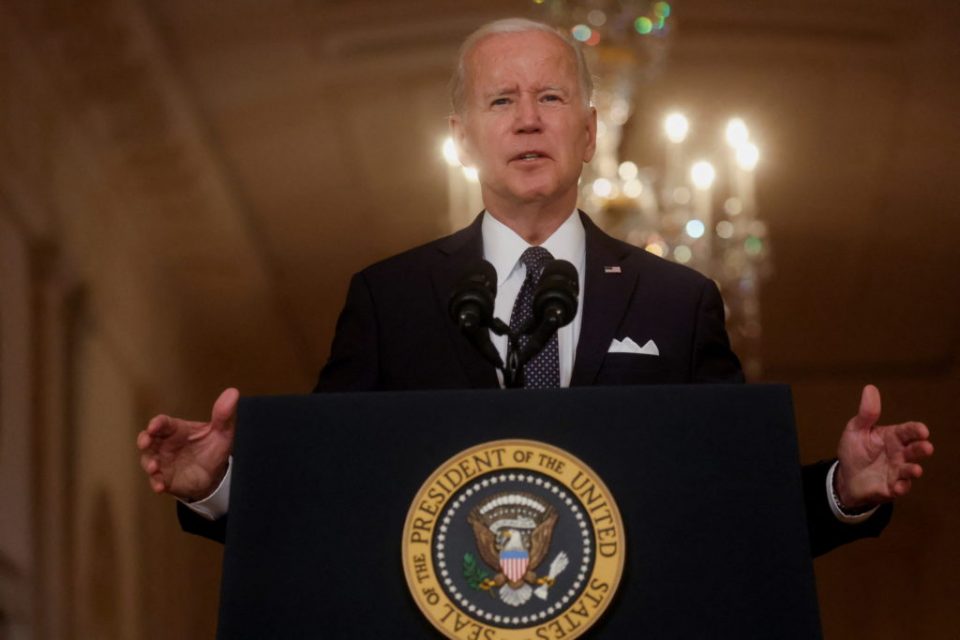
President Joe Biden speaks on inflation and supply chain issues while at the Port of Los Angeles on Friday.
The event is scheduled to begin at 1:45 p.m. ET. Watch in the player above.
The prices of gas, food and most other goods and services jumped in May, raising inflation to a new four-decade high and giving American households no respite from rising costs.
Consumer prices surged 8.6% last month from 12 months earlier, faster than April’s year-over-year increase of 8.3%, the Labor Department said Friday. The new inflation figure, the biggest yearly increase since December 1981, will heighten pressure on the Federal Reserve to continue raising interest rates aggressively.
On a month-to-month basis, prices jumped 1% from April to May, much faster than the 0.3% increase from March to April. Behind that surge were much higher prices for food, energy, rent, airline tickets and and new and used cars.
The widespread price increases also elevated so-called “core” inflation, a measure that excludes volatile food and energy prices. In May, core prices jumped a sharp 0.6% for a second straight month and are now 6% above where they were a year ago.
Friday’s report underscored the worry that inflation is broadening well beyond the spike in energy prices stemming from clogged supply chains and Russia’s invasion of Ukraine. And the increased pressure on the Fed to raises rates even faster — which will mean higher-cost loans for consumers and businesses — raises the risk of recession.
“Virtually every sector has higher-than-normal inflation,” said Ethan Harris, head of global economic research at Bank of America. “It’s made its way into every nook and cranny of the economy. That’s the thing that makes it concerning, because it means it’s likely to persist.”
This is a developing story and will be updated.
