

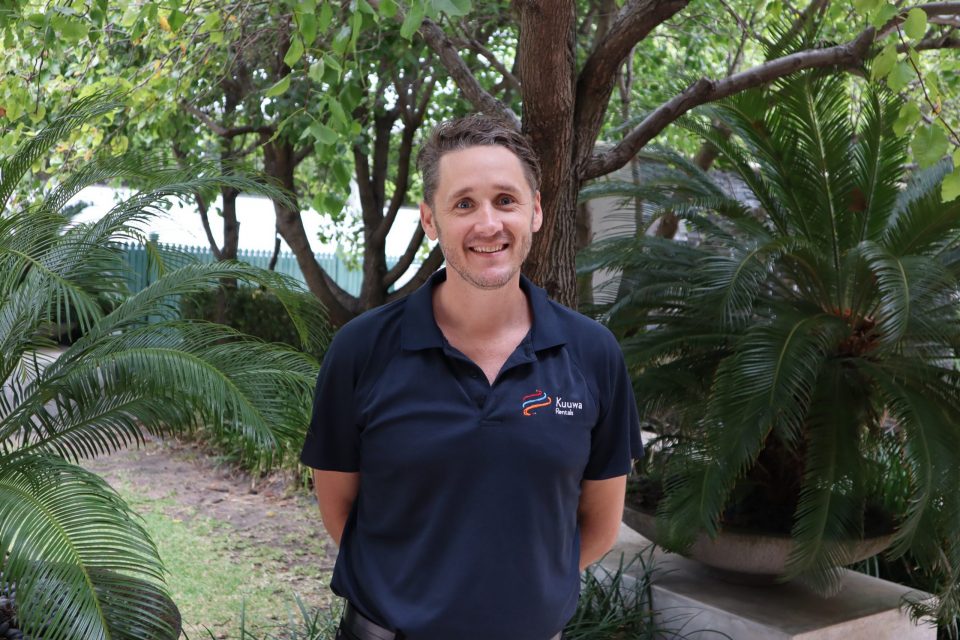
Kuuwa has grown dramatically in the past three years and so have I.
As an Indigenous-owned business, we have had the privilege of being at the forefront of support and development of traditional communities while serving WA biggest industry, mining.
And, as someone that started out as a mechanic, it is a dream come true to be part of the whole process from sourcing the right equipment and finding mine-ready solutions to delivering the equipment to site. But it was anything but a smooth ride from day one.
I started Kuuwa with a solid understanding of machinery and a savvy business mind but very little understanding of Indigenous culture.
I knew we were building a business that would become a sturdy commercial arm for a native title group and would support Indigenous communities.
What I didn’t get was the depth of the importance of creating a self-sufficient commercial arm and how invested I would become in making sure working with us wasn’t just a tick-the-box exercise for our partners.
Fast forward three years and hundreds of conversations later, I am still learning.
To begin with I would pitch Kuuwa to potential clients the only way I knew how. I looked at economics.
“Why partner with an indigenous-owned business?”
I have now answered this question a hundred times but my responses have changed significantly.
I would approach the subject from a strictly economic perspective: stuff like how working with Indigenous-owned business meant these companies would be able to tick off on their Indigenous spend for the project. Procurement would be happy.
Companies engaged in social and environmental change are also better perceived by the market and stakeholders, Working with Kuuwa would help their ESG score. Investors would be happy.
There would also be a case for how working with Indigenous-owned companies was a mechanism to better the mining sector’s image in society. The media would be happy.
I could even negotiate on price and make the finance department happy.
I quickly learnt that my equipment was the same as all of my competitors and in reality budging on price was having little impact.
Now, don’t get me wrong, all of the things I’ve said above are true. Working with Indigenous communities and businesses is not a charity, there are actual sound strategic reasons to do it.
However, I realised that these commercially-centred motivations should not be at the forefront of why a company should straighten its ties to traditional peoples.
Working with indigenous-owned businesses should not be seen as a publicity stunt to please shareholders.
The Traditional Peoples of Australia had their way of life persecuted, their children stolen and their lands polluted, and now, after many years, we are at the start of a slow process of reconciliation.
Supporting native-owned businesses should be about taking responsibility for the power one holds as head of a company in a central industry and empowering groups that have been pushed to the margins of society for centuries.
It is about providing health care, education and other basic services to break the cycle of trauma and aid these minorities into a better future.
Whatever commercial edge you gain from this should be seen as nothing more than a positive consequence of a greater goal.
It took me a while to grasp this, I certainly hadn’t grown up or worked in an environment previously that had valued this.
But now that I understand the real ‘why’ behind Kuuwa I can’t help but try and help others get it too.
There is a long road ahead for reconciliation in Australia and Indigenous-owned businesses, along with their partners, are going to be at the forefront of this wave of change.
The mining industry has always played a central role in the way Australia functions as a society.
It has been a motor for socioeconomic change in the past and now, it is time for it to be so again.
So, if you are at the position to make the call I ask you to consider in your procurement practices to understand that engaging with an indigenous business is not about ticking a box or increasing your ESG score but about truly understanding the value they bring to the way you do business.
- Wes Chapman is Kuuwa’s managing director
