

TWO million people will likely miss out on the Covid-19 vaccine in Ireland next year.
A planned strategy will be required to identify those who are not as prone to infection as others, especially young people who are unlikely to develop severe symptoms.
It came as one of the scientists behind the first Covid-19 vaccine to clear interim clinical trials has said the impact of the jab will kick in next summer, and normality should return by next winter.
GPs also expressed confidence about being able to efficiently administer as much of the vaccine as Ireland receives in 2021, even though it will be nowhere near enough for the whole population.
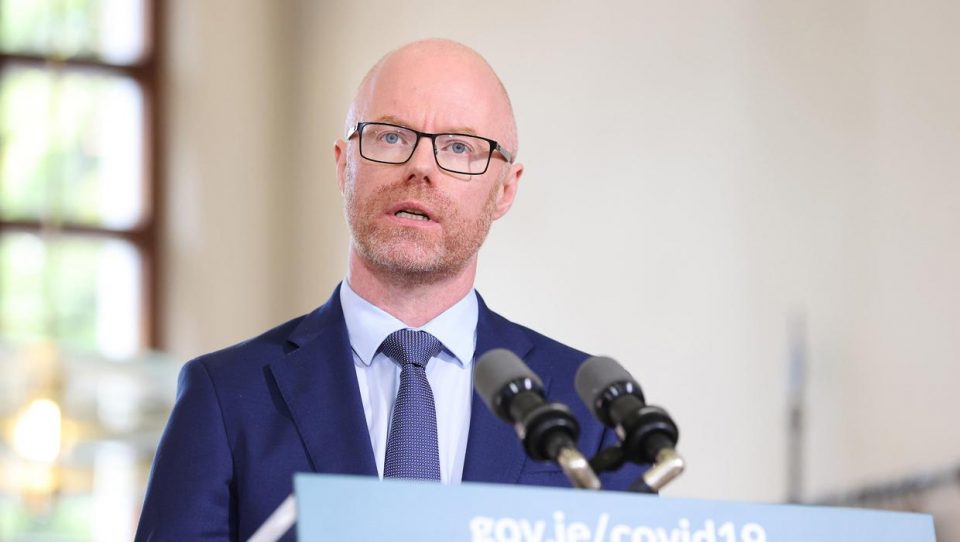
Health Minister Stephen Donnelly said that a “new task force has been established to do the detailed planning on exactly this issue. It’s looking at procurement, supply chains, logistics and distribution”.
The EU is to get 300 million doses of the new Pfizer-BioNTech vaccine, which is maximum production for the whole of next year.
Ireland will receive 1pc – three million for a population of about 4.9 million.
Manufacture, delivery and administering the vaccine in stages will mean most adults who are not in high priority or at-risk groups will not be inoculated before next summer, experts suggested last night.
The first million will go to 100,000 healthcare workers, including doctors, surgeons, nurses and paramedics, followed by 200,000 in at-risk groups, many of whom will also be people who are aged over 65.
Another 1.23 million in the 45-64 bracket would be vaccinated in the second half of next year, depending on speed of supply and if other vaccines in development work and are available here.
A senior Government figure told the Irish Independent: “Nobody should be fooled into thinking that they can have a vaccine in the early part of next year. There is obviously going to be many, many months of work in this and there will have to be prioritising of particular people in the rollout.
“It is just too early to be definitive about when ordinary people might have access to a vaccine.”
So far studies have shown that two doses are likely to be needed which will make the logistics of inoculating such large numbers of people even more difficult.
GPs are not represented on the high-level task force charged with prioritising the rollout of the vaccine.
Dr Denis McAuley, chairman of the GP committee of the Irish Medical Organisation, said if the vaccine proved effective, there would be a “clamour” to receive it. Steps would have to be taken to avoid spurious claims of individuals being in at-risk groups and “every early vaccine dose would almost have to have a name on it”.
“It is all going to be about manufacture and delivery – a set amount of vaccine will go to groups in particular order. Some will be at the bottom of the list. But we are very good vaccine givers – once we have vaccine to give.”
Dr John Cuddihy, interim director of the Health Protection Surveillance Centre, said at-risk groups in the first rank for a jab would include people who are over 70, healthcare workers and people who have particular medical conditions.
“The seasonal flu vaccine is offered free of charge to these groups,” he said. However Dr Cuddihy pointed out that the detail on the implementation of a new Covid-19 vaccine has yet to be worked out.
Speaking yesterday on Newstalk’s On the Record with Gavan Reilly, Dr Cuddihy said: “From what we know, two doses will be required.”
Meanwhile the requirement of the vaccine to be stored at -80C would mean “some logistical challenges”.
The high-level task force chaired by Professor Brian MacCraith met for the first time last week, with the Cabinet subcommittee on Covid-19 expected to meet this week.
Last week, pharmaceutical giant Pfizer revealed its vaccine had achieved 90pc efficacy in its phase three trial.
Speaking yesterday Prof Ugur Sahin, chief executive of BioNTech, said it was “absolutely essential” to have a high vaccination rate before autumn next year to ensure a return to normal life next winter.
“If everything continues to go well, we will start to deliver the vaccine end of this year, beginning next year,” he told the BBC’s Andrew Marr Show.
“What is absolutely essential is that we get a high vaccination rate before autumn/winter next year, so that means all the immunisation vaccination approaches must be accomplished before next autumn.
“I’m confident that this will happen, because a number of vaccine companies have been asked to increase the supply and so that we could have a normal winter next year.”
Meanwhile, chief medical officer Dr Tony Holohan has warned that people gathering to socialise is putting the country’s collective progress in fighting Covid-19 at risk.
As the five-day incidence rate continues its rise of recent days, with 378 new infections and one further death yesterday, he highlighted outbreaks associated with funerals.
