

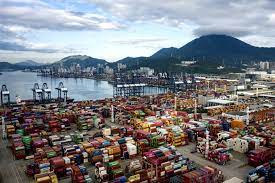
IMPORTERS and exporters must brace themselves for a worsening shipping and logistics situation that may persist even until 2023, as industry players do not see immediate signs of improvement.
Royal Cargo Inc. (RCI) President Elmer U. Sarmiento explained that recent developments both in local and international trade could further prolong and aggravate the already stretched global supply chain.
Sarmiento pointed out that China’s zero tolerance toward Covid-19 pandemic “will exacerbate” the “already stressed supply chain” this year.
China shut down the Ningbo-Zhoushan port, one of the busiest in the world, for about two weeks in August after just one worker tested positive for Covid-19.
“Some warn that this may not be the last closure at the port if Beijing continues to be very strict with their Covid-19 containment measures,” he said at a webinar hosted by the Cold Chain Association of the Philippines on Thursday.
The RCI official noted that certain domestic developments magnify the current problems of logistics and shipping. He noted a tightening in the ports of Manila as the Bureau of Customs (BOC) limits the number of reefers coming in by rationing reefer plugs.
“Even our own ports in Manila are getting very tight. Better try Subic and Batangas,” he said.
Sarmiento said the outlook for the global shipping and logistics situation remains gloomy as vessel delays due to port congestion and container shortage will continue in the next two years.
“Tight space situations will persist for exports to Europe and USA but there will be easing up for Asia. Freight rates will remain high except for sailings in China,” he said.
“Now, shipping lines refuse to send boxes in-land so they can pick up cargoes and empty containers immediately back to factories in Asia as quickly as possible to take advantage of historically-high shipping rates for exports,” he added.
Sarmiento said the new normal for local importers and exporters would include early planning for their orders and bookings by weeks or months ahead. Sarmiento added that some countries such as Vietnam have already opted to ship their goods via charter flights instead of ocean freight.
“Nobody knows…as a matter of fact no one is sure that this will normalize at all. This whole sea freight fiasco does not seem to be going away anytime soon and we are all on the same boat,” he said.
Sarmiento cited the situation of RCI’s Iris Paoay, which made a direct sail to Los Angeles, USA from the Philippines, but waited two weeks until it was allowed to berth due to persisting port congestions in the West.
“It just completed discharging containers in LA. Because of port congestion in LA we waited for two weeks until its berth,” he said.
“The added costs are really tremendous by just waiting. Finally, this ship has completed discharging and is now waiting for loading of imports back to the Philippines,” he added.
The existing global shipping and logistics problems have been flagged by experts and industry players as a huge concern to the country’s trade as they have caused delayed arrival of imports and higher costs for exports.
