

Text size
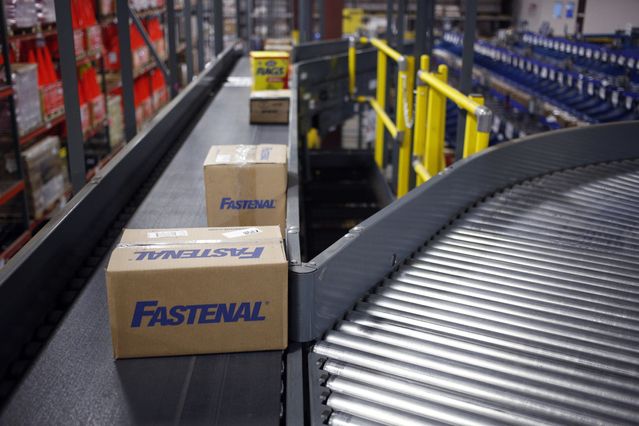
Industrial company Fastenal said the chaos surrounding supply-chain problems has receded.
Luke Sharrett/Bloomberg
Before the pandemic, Americans didn’t spent much time thinking about supply chains. Now it’s a hot topic of conversation on both Main Street and Wall Street, as shortages have hampered sales. It’s become a gripe for consumers at stores and a bugbear for companies’ bottom lines.
The good news is that at least some corporations see a little relief in sight.
First-quarter earnings season kicked off earlier this month, and supply chain constraints have been in focus across many industries. Plenty of companies have warned that various factors—from ongoing Covid-19 lockdowns in Asia to the Russian invasion of Ukraine—are stoking inflation and hindering the manufacture and transportation of goods. With those headwinds ongoing, it seems prudent for investors to brace for disruptions to remain an impediment near term.
Nonetheless, not all management commentary has been gloomy. Shares of paint and coatings maker
Sherwin-Williams (ticker: SHW) climbed following its upbeat earnings and forecast, as the report included an encouraging update about easing raw material and logistics constraints. “We believe we are through the worst of the industry supply chain challenges,” said Chief Executive Officer John Morikis in the company’s press release.
In contrast, appliance producer
Whirlpool (WHR) lowered its outlook for the full year on Monday. Chief Executive Officer Marc Bitzer said during a TV interview that shortages will plague the industry for the rest of the year. Still, he offered a small bit of hope, saying shortages “start easing. We start seeing them easing so it’s getting better.”
Industrial company
Fastenal (FAST), which reported last week, was similarly measured about the supply chain, but noted that even if it isn’t improving, companies’ responses to it are. “So while these disruptions persist, the chaos surrounding them has receded, resulting in a more predictable business environment.”
Other industries included some glimmers of hope as well. Healthcare bellwether
Johnson & Johnson (JNJ) called out shortages in everything from ingredients to packaging and labor, but still said that it expects “supply constraints to continue throughout the year but not to the same extent in the second half.”
Personal products maker
Kimberly-Clark (KMB) got a post-earnings boost, thanks to a strong first quarter and full-year guidance. It said the fading threat of the Omicron variant “helped us get our supply chain to a better place than what we expected back in January.”
A more encouraging pattern is emerging, especially for bigger players who have the resources to mitigate the worst impacts: eight in 10 major businesses have digitized supply chains to tackle disruption, according to data from international spend management company Proactis.
“Our transcript analysis of S&P 500 reporters suggests large companies’ supply chains generally are becoming more orderly, coinciding with other indicators that disruptions may be peaking,” writes
Wells Fargo’s Christopher Harvey in an update Tuesday.
Earnings season is still under way, with plenty of companies slated to report in the coming weeks, so the narrative could change. For now however, there’s at least some signs that supply chains may once again fade into the background.
Write to Teresa Rivas at [email protected]
