

Back in the fall, I needed a vinyl shower curtain liner and was stunned to find shelves empty at my local Walmart and Target stores.
I checked back periodically for a while and the same barren sight greeted me each time. Even this week, the shelves were bare, save one vinyl liner at Walmart.
Nearly two years after a run on consumer goods upended the U.S. supply chain at the start of the coronavirus pandemic, the movement of goods is still herky-jerky and random shortages persist.
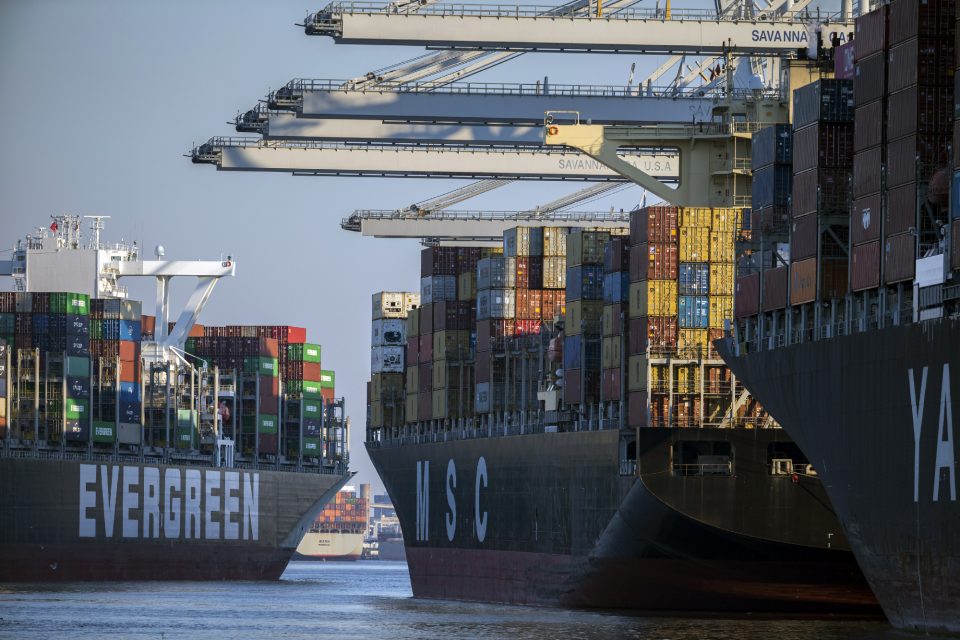
When will things return to working order? Maybe never, says a new report from investment banker RBC Capital Markets that looks in particular at the logjam of ships and containers at the Ports of Los Angeles and Long Beach in California, the busiest in the country.
Part of the blame for that rests with “hellacious” levels of demand from consumers who began shopping online during the pandemic and continue to do so, rather than spending on services such as entertainment and travel as COVID infections persist, says Michael Tran, head of digital intelligence strategy at RBC Capital and an author of the report.
The average U.S. household has more discretionary income, based on higher savings rates of late, he noted last week in a supply chain webinar hosted by The Food Institute, so consumers keep “ordering ‘stuff’ online.”
Hypothetically, then, “if consumer demand for goods remains elevated in perpetuity at current levels, the Ports of Los Angeles and Long Beach would never be able to fully clear the backlog and untangle the supply chain,” Tran said.
The RBC Capital report looked at 22 ports worldwide and put the Los Angeles/Long Beach ports – which made headlines in October and November as ships queued up off the coast waiting to unload – at the bottom of a list of port turnaround times.
At LA/Long Beach, the time now for a ship to enter, unload, reload and leave is 7.5 days, versus 3.5 days pre-COVID. In contrast, turnaround times at some of the major Chinese ports have declined since 2019, due to increased automation, according to the report.
Beyond the bottlenecks at LA/Long Beach (which the Wall Street Journal reported this week are spreading to other U.S. ports), a “spider web of issues” await, Tran said. “So goods can’t move even when they’re off the port.”
Those problems include a shortage of trucks and drivers, with RBC Capital putting the country shy 85,000 drivers. Meantime, load-to-truck ratios – the demand for trucks – are two to three times higher than in 2019, depending on the trailer type.
China’s zero-tolerance COVID policy has led to occasional interruptions at its ports, giving the U.S. a reprieve from the “conveyor belt of ships” headed here, according to the RBC Capital report.
But, it says, “[a]bsent medium-term infrastructure investments,” the bottlenecks will become structural “assuming the current level of consumer demand persists.”
Marlene Kennedy is a freelance columnist. Opinions expressed in her column are her own and not necessarily the newspaper’s. Reach her at [email protected].
More from The Daily Gazette:
Categories: Business
