

This is the winning entry in the 2020 FT Schools/Royal Geographical Society (with the Institute of British Geographers) essay competition. Reuben Meadows is a student at All Saints RC School, York.
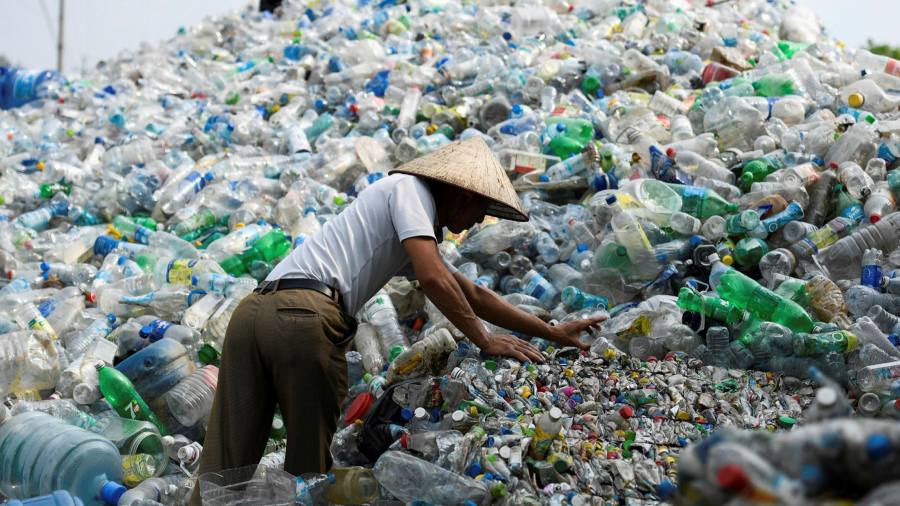
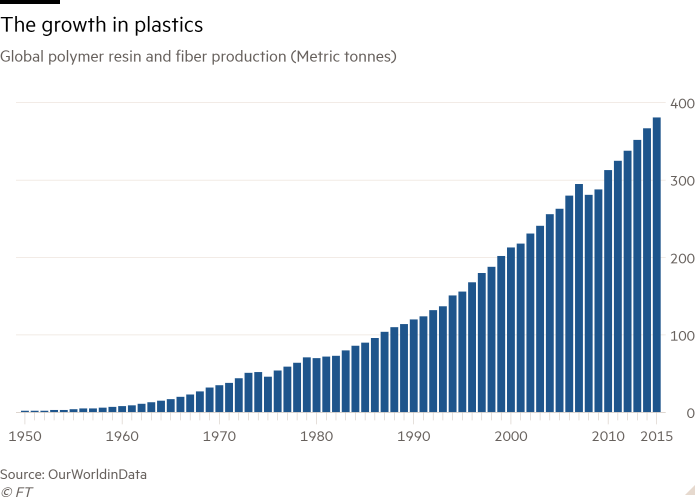
Plastic. It’s a worldwide possession, and unfortunately now something of an unhealthy obsession. Since its widespread inception into modern manufacturing in the 1950s, the use of plastics in our globalised society has only increased; we simply can’t get enough of it.
The upcoming COP26 aims to find workable solutions to the emissions crisis and develop ways to push sustainable development for a cleaner world.
One subject little discussed in this field is plastic; not only is its single-use culture damaging for our society, but a significant problem if we are to combat the climate crisis.
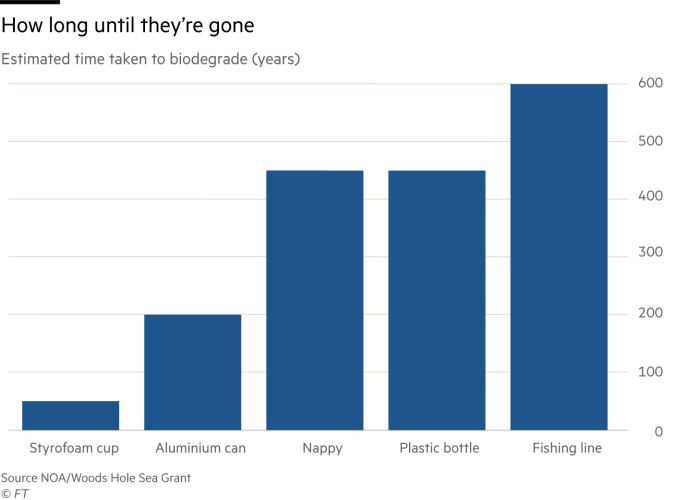
For products that have even been shown to be used for a single second, the long-term impacts are huge. From every moment excluding the point of utility, plastic is catastrophic for our environment. It’s not simply an issue of saving turtles from plastic bags.
Nearly two-thirds of crude oil from the petrochemical sector is used for plastic manufacturing, a process by which extracting, transporting and production creates billions of tonnes of greenhouse gases.
The way we discard it is troubling as well. By 2050, emissions from plastic incineration could be as high as 2.5bn tonnes — worsening global warming and air pollution with serious consequences for human health, with the hardest hit inevitably those in low-income countries.
The world’s addiction to plastic
Clearly, something must shift in order to achieve our COP26 goals.
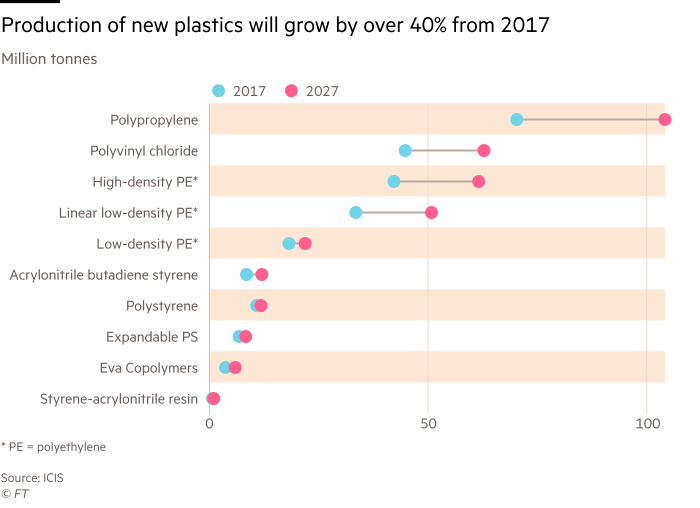
However, the question of how we go about reforming a $1.2tn industry is crucial. Even despite current environmental pressures, the production of virgin plastics continues to grow.
It should be no surprise. Plastic fuels global commerce, from the packaging of goods to construction. The highly durable and useful properties of this versatile material make it invaluable.
Consequently, it is important to acknowledge that plastics will continue to play a significant role in our world, and we should therefore encourage reusing and recycling in order to curtail virgin plastic consumption.
Nevertheless, it is vital for governments and institutions to incentivise sustainable solutions and innovation in order to create a technological revolution, whether for plastic substitutes or a cleaner economy that prioritises people over profit.
A question of responsibility
The idea of accountability for the management of plastics is a contentious subject and one that draws a great variety of approaches. While it is correct to assume that they are often defined by the level of infrastructure and development found in a region, there are some anomalies.
Broadly speaking, westernised countries, particularly in Europe, have the highest standards of recycling in the world. Denmark is one example, where waste is regarded as a valuable resource and where in 2019, 92 per cent of all plastic bottles and cans were recycled.
Other countries such as Germany have developed sophisticated recycling systems with fines of up to €2,500 for non-compliance. In these countries it is important to note that the recycling of plastics and other waste is seen as a public obligation to participate in a state-provided system.
In contrast, the approach to recycling in Dharavi (one of India’s largest slums in Mumbai) is one of opportunistic economics. An average daily wage of 80p and flexible worker’s rights result in a system capable of recycling unparalleled levels of waste. About 15,000 factories dedicated to recycling provide employment for almost 250,000 people to recycle 80 per cent of Mumbai’s solid waste, a megacity of 15.5m people.
Singapore is credited with the third-best waste management system in the world, yet in comparison only recycles 60 per cent of its solid waste for a country of just 5.7m people.
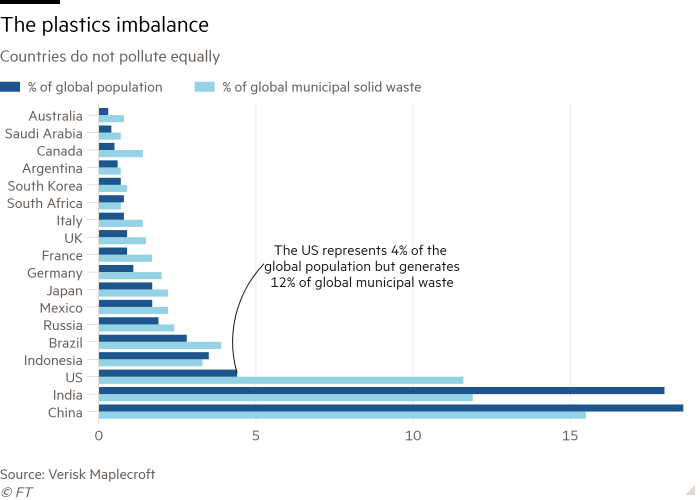
Unfortunately, the US, said to be one of the most developed countries in the world, utterly fails on recycling. It generates far more waste and recycles far less than any other developed country.
For the US, there is a problem of excess: a highly consumerist society fuels standards of commercial practice wildly unsustainable for the planet. In fact, if we all lived like the US population, we would need four planets to make everything it consumes.
However, even some countries that appear progressive with their stance on plastic recycling often hide a dark truth. It is now common practice for governments to assign recycling obligations to corporations, with waste materials and packaging exported to processing plants across the world. Yet much does not end up where it is supposed to.
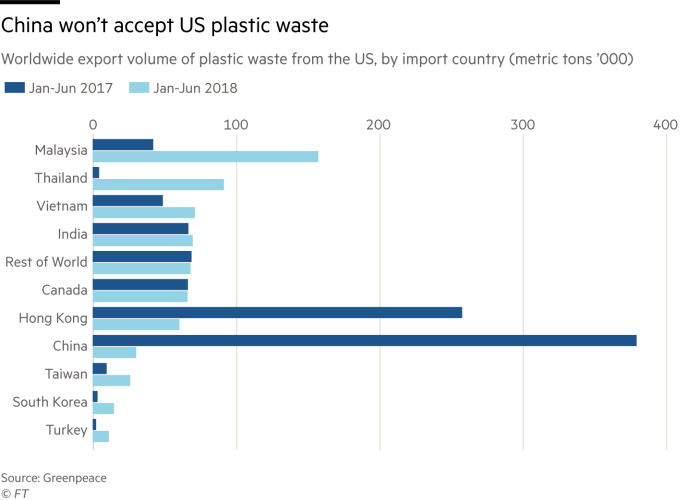
For years, Asia has become a dumping ground for wealthier nations to dispose of unwanted plastics. Countries such as the UK, Australia, and the US all illegally ship waste under the pretence of “to be recycled”. It often ends up as landfill in countries such as Malaysia and the Philippines since China began to put in place measures to stop the practice in 2017.
This creates a perpetual feedback loop, as sunlight and heat cause vast amounts of accumulating plastic to release powerful greenhouse gases, increasing the global temperature and consequently the rate of climate change.
Thoughts on a solution
We know that due to our actions, there’s no “silver bullet” to eradicating plastic’s global presence. It is here to stay for a long time yet. What is vital is that we all recognise our shared duty to fix the problem.
That may be through lobbying multinational corporations to take greater responsibility for the waste they produce, encouraging governments to impose and achieve ambitious targets, supporting the work of charitable organisations and, most importantly, taking an active role ourselves in knowing where our plastic ends up and what we can do about it.
Register with the FT free schools access programme at www.ft.com/schoolsarefree
