

It’s hard to let go of some Christmas traditions.
Take, for instance, mistletoe. There is some speculation that the holiday greenery may not be so popular now that kissing strangers at holiday parties is out of vogue because of COVID-19 concerns.
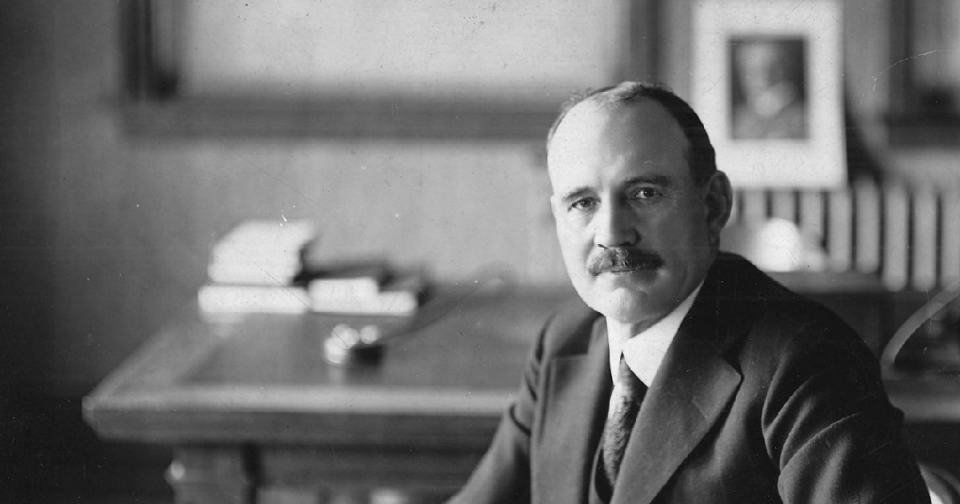
There are some Christmas traditions that ended long ago and we will probably never see again. Case in point: the traditions like the one fostered by Charles W. Nash on Christmas Eve over 100 years ago.
On Christmas Eve, 1919, Nash stood at the main gate of his automobile factory (Nash Motors, forerunner of American Motors) and handed every one of his employees an envelope with a crisp ten dollar bill.
Ten dollars was nothing to sneeze at back then considering it was more than three day’s pay. In today’s terms, that’s the equivalent of three days of eight-hour shifts on a minimum wage job: $174.
Nash’s Christmas pay envelope came with a handshake and a personal cheery holiday greeting.
People are also reading…
This episode became an annual event, one that impressed the workforce greatly. By 1925 the shop employees were 4,500 strong and Nash’s grip must have felt the effects by the end of the day.
Nash did the same thing for his office employees, with one additional feature: he would call his industrial white-collar family together and convey a thoughtful end-of-the-year message. This message, seasoned the experience of his underlying manufacturing knowledge and skill.
He was regarded as a man who had the courage to think for himself and to follow his own course of rigid integrity and fairness, even if he was a little paternalistic.
Came the crash
In the early 1920s, during a post war slump (Nash’s profits came in large part due to the sale of the four-wheel-drive Nash Quad to the US Army in WWI), it was Nash who said, “We do not know what the business conditions of the coming year will be, but if anyone builds cars, we will build them.”
Who could have known, that less than a decade later, hundreds of Kenoshans would be standing in breadlines and the Nash workforce cut to bare bones.
But Nash’s Christmas Eve ritual continued with the greatly reduced workforce. The company-wide newsletter the Ke-Nash-A-Club News noted: “In other years of plenty with mounting production and an era of fat pay envelopes, this ten dollar remembrance for Yuletide may not have meant so much … those were the piping hot times times of 1929-30. A ten dollar bill looms very large now. It was so vital to most of our people at this Christmas time that it was pathetic.”
In December 1930, 14 months after the historic stock market crash, Nash had the Ke-Nash-A-Club print his holiday message in the newsletter:
“I regret that the great depression, which has held the whole world in its grasp during the past year makes it impossible to deliver to you as cheerful a message as I would like.
“Many things have happened since the last Christmas message was written. The most regretful thing that has taken place, to my mind, is the fact that there has not been sufficient employment anywhere in the world for men and women who have been eager and willing to work. I cannot conceive of a more trying situation to be confronted with than to be willing to work and to find there is no work to be had.
“I sincerely hope everyone associated with the Nash Motors Co. will view the present situation in a sane manner, and will feel that if it were humanly possible, The Nash Motors Co. would be only too glad to furnish employment to everyone who might apply.
Nash’s prediction
“We are now approaching a new year. I feel I can say confidently that the year 1931 will show a better condition than the year 1930. I am quite sure that public confidence is gradually being restored in the country, and to my mind that is what is needed more than anything else. When one loses confidence, the real foundation of our existence is disturbed.
“It is a fact that the automobile business as a whole, has been greatly reduced; nevertheless, at the present moment, figures which are obtainable disclose the fact that the Nash Motors Co. product is improving the competitive position it occupies. I am quite positive that as soon as buying takes place, the Nash product will continue to receive favorable consideration.
“It is my earnest hope that business may be resumed in a normal way before the year 1931 has passed. The only cheerful news I can bring you is that I believe we have touched bottom as far as the depression is concerned, and that we have turned the corner in the direction of Prosperity, and that before the year 1931 has passed, we will all feel that we are in a much better position.
“I hope this holiday season which we are now entering will find all of you and your families enjoying good health, and that you continue throughout the coming year to enjoy good health and happiness.”
In other years, Nash hit his mark with his uncanny ability to see into the industrial future. Not this time.
We now know that this time he was wrong and it would be another decade before the economy could crawl out of the Great Depression as the factories reverted to wartime products when Pearl Harbor was bombed and America entered into WWII.
But in the simple holiday celebrations of 1930, Nash offered his own personal Christmas wish for the coming year.
