

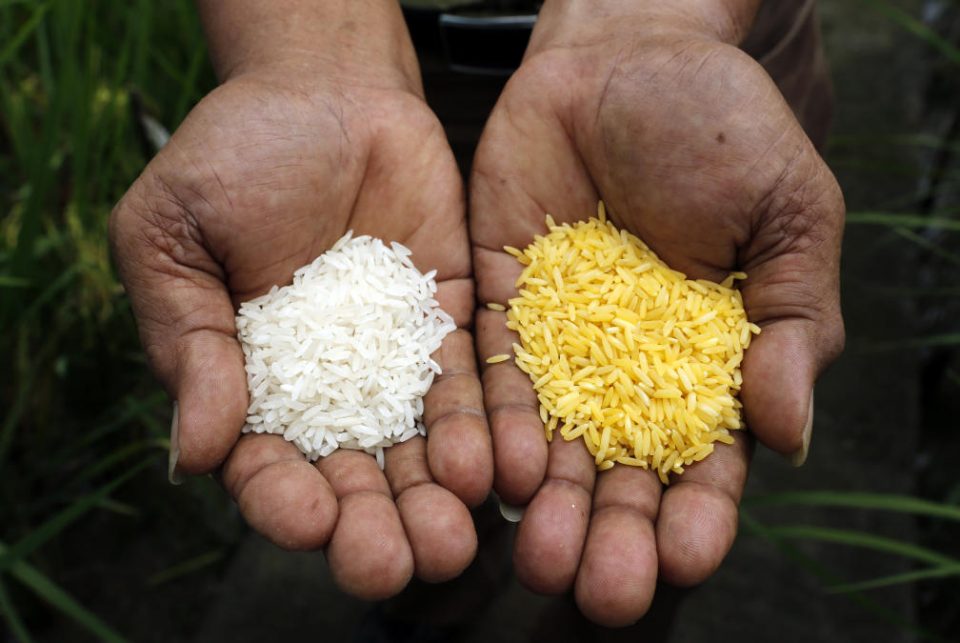
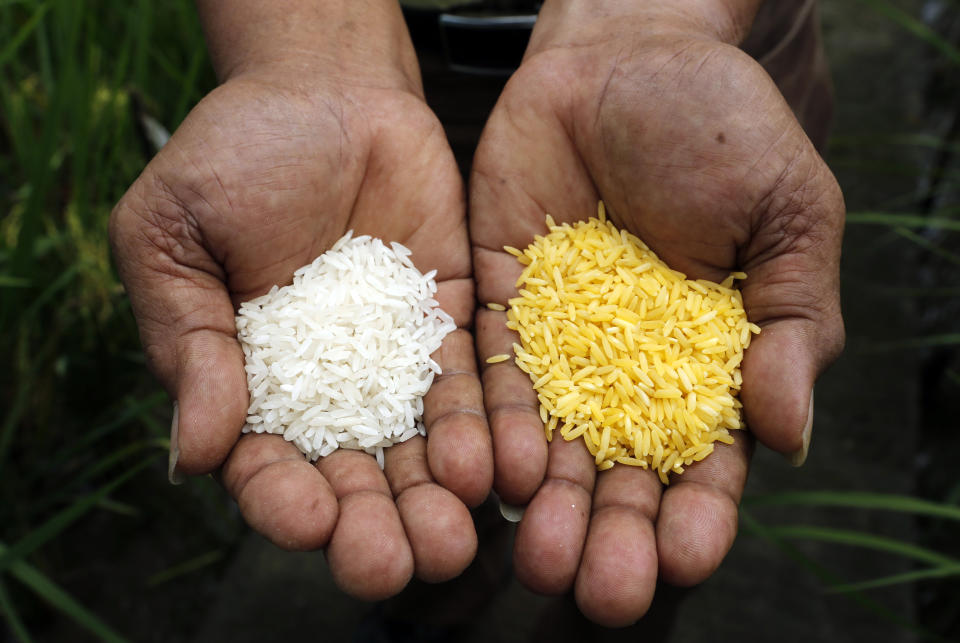
Farmer-scientist group Magsasaka at Siyentipiko para sa Pag-unlad ng Agrikultura (MASIPAG) slammed agriculture secretary William Dar for “railroading” golden rice (GR) distribution in the Philippines.
“[…] this kind of attitude that William Dar and the Department of Agriculture (DA) has been showing is a living testament that their priority is profit and welfare of philanthro-capitalists, agro-chemical corporations, and the United States Government,” MASIPAG National Coordinator Alfie Pulumbarit slammed in a Friday (April 8) statement, comparing the development to outgoing Pres. Rodrigo Duterte’s neoliberal policies such as the hotly contested 100% foreign ownership of foreign utilities.
The fruit of a collaboration between IRRI and the agricultural company Syngenta, GR is a genetically-modified rice originally meant to be a remedy for vitamin A deficiency (VAD). The World Health Organization said that consequences include night blindness, heightened vulnerability to infections, and complications in lactation and pregnancy.
In an event by the United States Department of Agriculture last Thursday (April 7), the Philippine Rice Research Institute (PhilRice) announced that the National Seed Industry Council (NSIC) has approved GR for varietal registration.
Good intentions aside, critics such as MASIPAG, the Stop Golden Rice Network (SGRN), as well as farmer groups have long lamented the possible environmental and economic damage that may come from popularizing GR in the Philippines.
Ex-MASIPAG National Coordinator Cris Panerio questioned the swiftness of NSIC’s approval, saying that “it’s highly suspicious that the approval of NSIC to golden rice’s varietal registration has been this ridiculously quick despite the pending appeal to revoke its biosafety permits that we filed in the Department of Agriculture and the undeniable wide public opposition to its implementation.”
MASIPAG’s recent visit to a pilot deployment site in Catanduanes led to the discovery that farmers had almost no idea as to how their economic and environmental concerns would be resolved. Chief among these being GR’s capability to genetically contaminate rice varieties.
Despite consultations between the target stakeholders and the Department of Agriculture (DA), MASIPAG Advocacy Officer Patrick Cueva said that the government made themselves “unaccountable” by not discussing health insurance and other “safety nets” during the consultations.
“Scientific studies have yet to have a concrete understanding on how Golden Rice affects the human body as even animal consumption trials have not even been done. Yet William Dar is hellbent on feeding Golden Rice implicitly making the Filipino people as the guinea pigs for this dangerous rice technology,” Cueva said.
As eerie as IRRI
Calls against GR have been prevalent even before the latest announcement. During an earlier press conference, held on the 62nd anniversary of IRRI this Monday (April 4), MASIPAG, farmers, and fellow advocates blasted the institute for their hand in the making of GR.
“IRRI promised us of a bountiful harvest if we plant their monoculture oriented and genetically modified crops, yet what did we get? Abnormal occurrence of pests due to disrupted local ecology, piling financial debts due to heavy pesticide use, and already exhausted and unplantable soil within a short period of time,” environmental biologist Dr. Chito Medina slammed.
Controversy haunted IRRI in the years since it was founded. Among such issues include the institute allegedly being hands-off when employees fell ill or died in the line of work (due to being exposed to toxic pesticides and other substances). Critics highlighted how Presidential Decree (PD) 1620, which absolves IRRI of any wrongdoing, hindered any attempt to hold them accountable.
“IRRI has a long list of crimes against Filipino farmers- from contracting cancer and tuberculosis-like ailments due to long term exposure to chemical pesticides and such, erasing our thousands of traditional and farmer-bred rice varieties and trapping, and trapping our farmers under mountains of financial debt due to costly chemical inputs that their seeds require,” Panerio said in the press conference.
Meanwhile, Medina added that “as long as IRRI exists, we will never achieve genuine food sovereignty.”
MASIPAG called for signatories in their petition to revoke the commercial propagation biosafety permit for GR. With a goal of at least 1,500 signatures, as of writing, 1,115 have already signed the petition.
Reuben Pio Martinez is a news writer who covers stories on various communities and scientific matters. He regularly tunes-in to local happenings. The views expressed are his own.
Watch more videos on Yahoo:
