

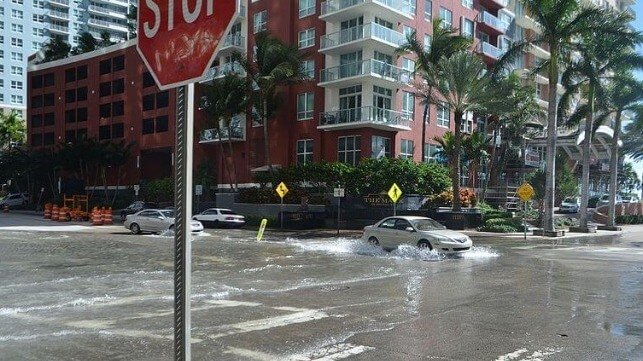
The U.S. government has released its latest forecast for sea level rise through 2150, updating a report last revised in 2017. The conclusions are concerning: by 2050, the sea level along America’s coastlines will rise by an estimated 10-12 inches, which is as much as the rise measured over the span of the previous century.
“This is a global wake-up call and gives Americans the information needed to act now to best position ourselves for the future,” said NOAA Administrator Rick Spinrad in a statement Tuesday.
The extent of sea level rise will vary by region due to the influences of variable ocean height and future changes in land elevation. The Gulf Coast will see the greatest increase with a rise of about 14-18 inches, and Southeast Alaska will be the least affected. The overall effects will be challenging for coastal residents in all localities: moderate flooding events will increase by a factor of ten, reaching an average of four events per year, and major flooding will occur five times as often as it does today.
By 2100, sea level rise may reach a total of two feet above 2020 levels, and up to seven feet if little is done to control future CO2 emissions, NOAA warned. Ice-sheet instability in Greenland and Antarctica is a major unknown, and the exact temperature change that would trigger a large-scale change in sea level is difficult to predict with certainty.
Though the trajectory for sea level rise is more or less set for the next 30 years – NOAA is more confident than ever that it will happen – the longer-term forecast varies significantly depending on the degree of global climate action.
“There will be water in the streets unless action is taken in more and more communities,” top NOAA sea level rise scientist William Sweet told the Washington Post. “We’re unfortunately headed for a flood regime shift.”
