

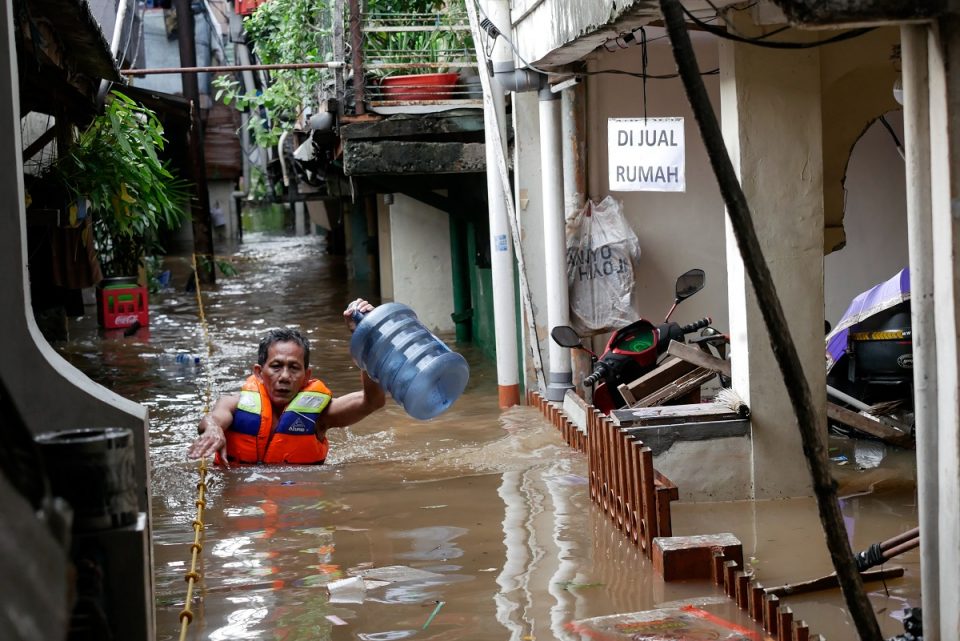
Aid is finally reaching the millions of Pakistanis whose lives have been upended by devastating floods. The United Nations has launched a US$160 million emergency plan; supplies are being flown in from the Middle East and elsewhere in Asia; and donors and publics across the world are responding to this most recent disaster appeal.
Pakistan’s tragedy is the latest in a series of global emergencies resulting from a rapidly changing climate. And while the floodwaters have not yet receded, it isn’t too early to assess what this crisis can teach us about the challenges of humanitarian response in an era of increasingly extreme weather.
Since the mid-20th century, humanitarian action has made a measurable impact on lives and communities. Disasters, especially famine, kill far fewer people now than they did before the 1960s. But the changes wrought by the climate emergency mean disasters will become deadlier unless the humanitarian aid sector adjusts its strategy.
For all the good humanitarianism has done, it has also created dependency on a system that reacts to, rather than seeks to prevent, disasters.
Meeting the new challenges will require rethinking some of the core tenets of humanitarianism and speeding up reforms and changes to create a more flexible, proactive system built on principles of prevention, resilience, and decentralized disaster governance.
First, risk analysis and modeling must become firmly baked into the heart of humanitarianism. Early warning systems that can detect impending droughts or floods have long been a feature of disaster prevention and mitigation (and may have helped limit the number killed in Pakistan’s floods, a tally that now exceeds 1,250).
Models predicting the impact of changes in temperature, precipitation, disease outbreaks, and other variables are already helping communities prepare for the worst.
But current systems need more funding to maintain, and new systems must be decentralized across global regions to maximize their utility. Critically, data need to be shared more widely between state and civil-society organizations.
Second, disaster management must shift from a response mindset to one of reducing risk and building resilience before crises strike.
In 1970, flooding triggered by a massive cyclone killed around 500,000 people in what was then East Pakistan (now Bangladesh). A similar cyclone and flood in the same area two years ago killed just 30, thanks to extensive flood-mitigation measures and policies.
Meanwhile, governments in Pacific Island states such as Kiribati and Vanuatu are investing in health infrastructure that will be better able to withstand floods and typhoons, as well as preparing community-based disaster preparedness plans to respond more rapidly and effectively.
It’s not only countries of the Global South that are focused on making systems, structures, and societies more resilient. The California state government recently allocated an additional $15 billion to reduce the risk and mitigate the impact of wildfires. Ensuring transport networks, health systems, and food systems can withstand shocks is vital for protecting the most vulnerable during a disaster.
Building resilience and preparedness is often seen as falling outside the humanitarian sector’s area of responsibility, acting as it does as the global first responder. Yet such activity is core to disaster management, and must be a core part of humanitarianism’s mandate.
The third change is shifting how the sector responds to disasters themselves. Here, reforms are needed to speed up and better integrate local solutions that ensure more resilient communities emerge when the emergency passes.
In the aftermath of the devastating 2010 Haitian earthquake, humanitarian organizations were criticized for failing to work with local, state, and non-governmental organizations in their responses, creating parallel and separate systems that increased aid dependency and made building back local capacity harder.
Reflecting on those failures and others, the humanitarian sector and donors have committed to delivering more aid and interventions through local organizations. To date, however, progress has been slow and limited. Embedding responses within local contexts, with active participation from affected communities, will enhance and improve those responses.
But localization also needs to be integrated more fully into global and regional infrastructures. The United Arab Emirates has played a critical role in coordinating support to Pakistan, while Dubai’s International Humanitarian City is the largest of a growing network of humanitarian hubs that can respond quickly to regional disasters. Such infrastructure can support the bridging of global and local responses.
Many humanitarian organizations view building more resilient systems as beyond their remit, concerned that anything that deals with social inequality and vulnerability risks becoming politicized in a way that might conflict with the humanitarian concept of neutrality. But failing to address this necessity will only perpetuate dependency on external responses and organizations and worsen the impact of disasters.
The devastating human toll of the floods in Pakistan is a warning to us all. As the impact of the climate emergency picks up pace, and as rich countries continue to evade their culpability in its creation, the poor, vulnerable, and marginalized are dying as a result.
These issues are already being debated within the humanitarian sector, but as Pakistan’s horrific floods remind us, commitments and discussions alone will not prepare the humanitarian system for the challenges that await.
This article was provided by Syndication Bureau, which holds copyright.
