The Supply chain has transformed, and companies haven’t updated the underlying technology for managing them in decades. With Blockchain technology, companies can rebuild their approach to supply chain management at the ecosystem level and go from the island of insight to an integrated world wide view.
“At its most basic level, the core logic of blockchains means that no piece of inventory can exist in the same place twice.”
-Paul Brody
EY Global Innovation Blockchain Leader
Here are a few ideas on how Blockchain is revolutionizing the supply chain industry.
Everyone likes to hate middleman, but it works out they are really useful. Until the advent of bitcoin and blockchain technology, the only path you could get numerous entities to agree upon a shared, truthful pair of data(such as who owns how much money).
This was for appointing an impartial intermediary to process and take into account all transactions. Blockchain allows for ecosystems of business partners to share and agree upon key items of information. Facebook’s Libra is also using blockchain technology.
Instead of experiencing a central intermediary, blockchains synchronize all data and transactions over the network and each participant verifies the task and calculations of the others. This enormous amount of redundancy and crosschecking is why financial solutions like Bitcoin are so secure and reliable.
Even as they synchronize hundreds of thousands of transactions across thousands of network nodes weekly.
“The Core logic of blockchain applied to the supply chain”
The radically new approach to supply chain management.
– Advertisement –
Apply the same security and redundancy to something such as inventory — and substitute supply chain partners for banking nodes. You’ll have the foundation for a radically new method of supply chain partners for banking nodes. You’ll also provide the foundation for a radically new method of supply chain management.
The use cases with this new means of working are compelling.
At its most basic level, the core logic of blockchain implies that no little bit of inventory can exist in the same place twice. Move a product from finished goods to in-transit, and that transaction status will update for everyone, every-where, within minutes.
With Blockchain you have full traceability back to the purpose of origin.
– Advertisement –
Before diving to the pool of ” How Blockchain is Revolutionizing the Supply Chain Industry” let’s take a brief look at the definition of Supply Chain and Blockchain.
Blockchain
Most folks have heard the phrase, “Blockchain is the foremost invention because the Internet ” or ” Everything will be Blockchain in many years.”
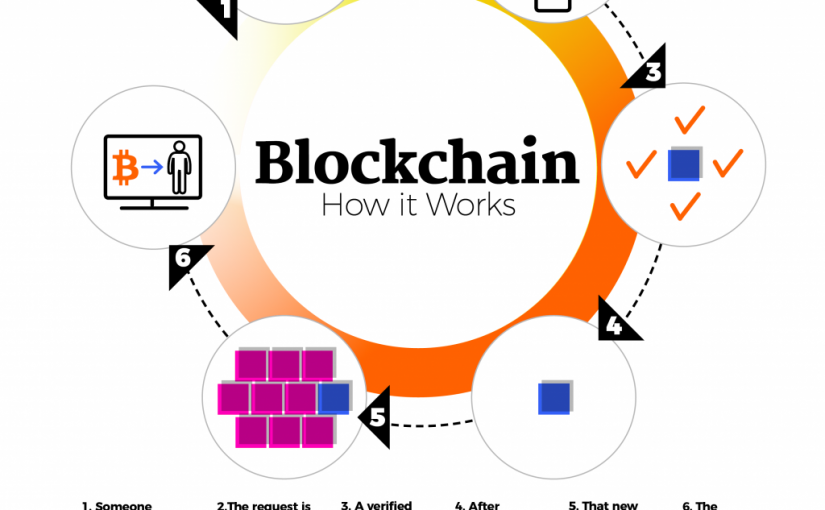
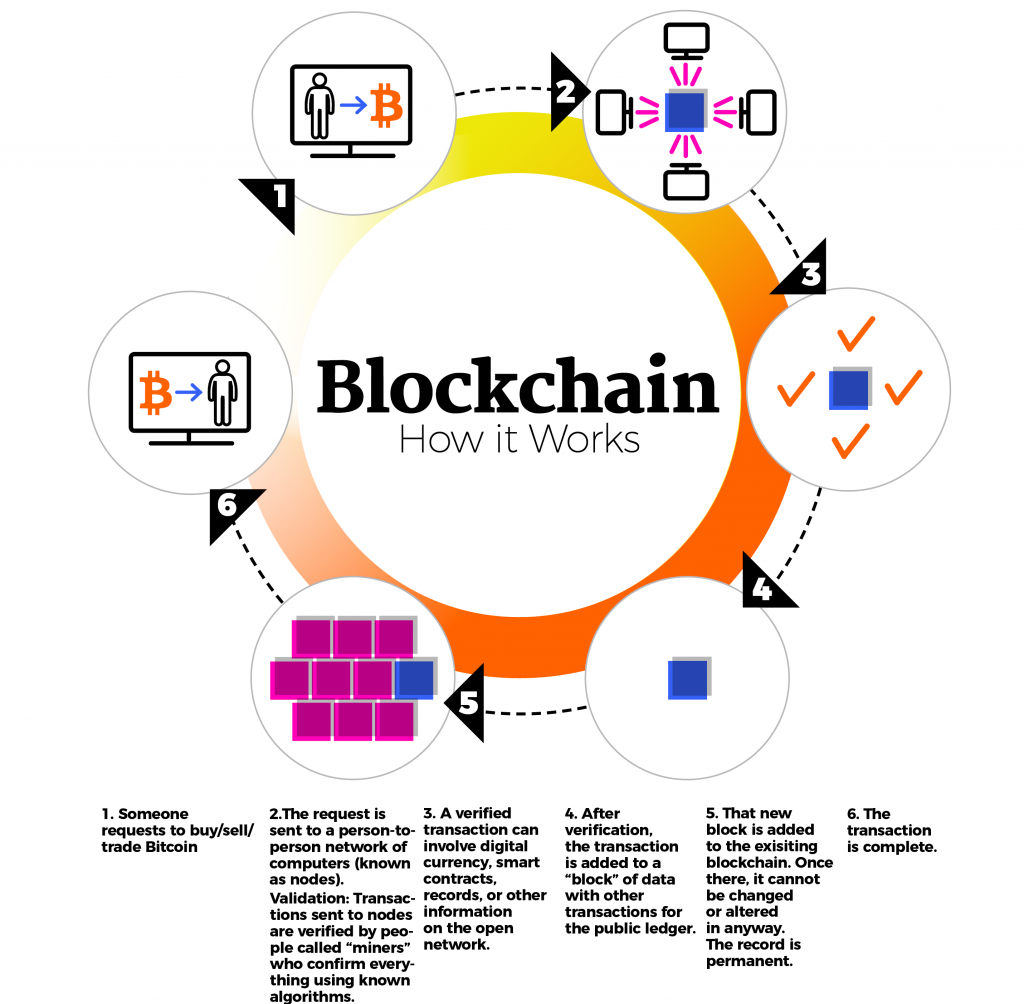
These phrases have a tendency to leave people more confused then they were previously. Blockchain is a decentralized, distributed database that holds digital records securely. Furthermore, although all records are transparent and accessible to the public, they’re not altered, deleted or edited.
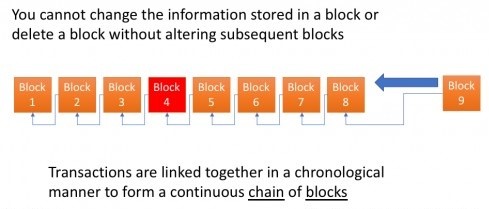
All data inserted to the blockchain remains impaired permanently. Each transaction or record inserted in the Blockchain registers an alternative “Block” on the chain.
Basically, Blockchain offers a method of record-keeping which is highly secure and much more efficient for businesses/individuals to utilize. BlockChain along side Ai can be helping to shape the future of robotics in various ways.
Robotics Programming Language for robotics uses AI and blockchain together can truly add efficiency to autonomous cars, or they are able to help in bitcoin mining.
Supply Chain Management (SCM)
Nowadays we have the blissful luxury of having ready-made, high-quality products and services right on our doorstep. It’s easy to visit a store, obtain a shirt, and never think of where that shirt came from or how it had been manufactured. That shirt originated in how it had been manufactured.
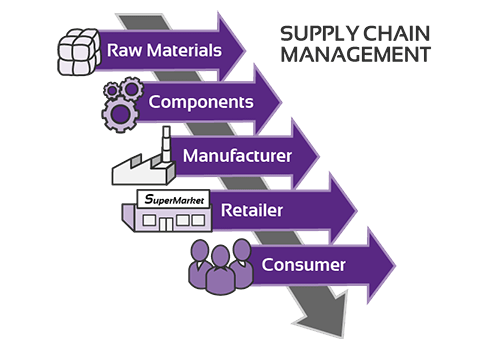
For that shirt or product to produce it store shelves it must undergo plenty of hands stemming completely from the provider of the recycleables, to the retailer who’s giving you the ready-made product.
The process which links all of the parties involved with delivering you the ready-made product is named the Supply Chain.
Logistics is just a huge part of Supply Chain Management.
Products are shipped, stored in warehouses, and undergo customs. The entire process is time intensive, costly, and several times complicated. In addition, since world wide trade involves dealing with foreign organizations, importers and exporters may have to cope with political outcomes, international law, and high tariffs.
“Through blockchains, companies gain a real-time digital ledger of transactions and movements for all participants in their supply chain network. But don’t let the simplicity of the tool overshadow how transformational it is.”
Paul Brody
EY Global Innovation Blockchain Leader
Blockchain Stepping In
Some of the very urgent dilemmas facing supply chains may be addressed through blockchain technology, as it provides novel methods to record, transmit, and share data.
In essence, a blockchain is a unique database system created and maintained by participants in a decentralized network. It offers a secure and reliable architecture for conveying information and transactions ( e.g. the exchange of data and assets among participants in a supply chain), which may be recorded digitally.
As the distributed ledger is decentralized, each stakeholder maintains a copy, which prevents a single point of failure or data loss. This also means blockchains are highly resistant to altering or tampering. Such accurate and tamper-proof records secure data integrity and may be accessed to make regulatory compliance easier.
Ultimately, blockchain can increase the efficiency and transparency of supply chains and positively impact everything from warehousing to delivery to payment.
All parties involved from beginning to result in the supply chain will undoubtedly be aware because the product is transacted and handled from party to party all the time.
Through the implementation of Blockchain technology in the Supply Chain Industry, products may be tracked and traced through the duration of their entire process.
Traceable and Immutable Records
Blockchain data is immutable and digital signatures which require to ensure information ownership. If multiple companies interact they can make use of a blockchain system to record data concerning the location and ownership of these materials and products.
The data is stored in the blockchain, that offers a full history of all items in the supply chain. Any person in the supply chain can easily see what is going on as materials move from company to company. These data records can’t be altered and so are highly Traceable.
In the event of a defective product, the origin of the issue can be identified more quickly, which improves the efficiency of product recalls and disruption resolution between stakeholders in the chain.
Having a transparent and complete inventory of product flow help businesses make smarter decisions.
It gives stakeholders and customers more confidence in the products’ quality. The improved transparency is also an instrument for fighting fraud and counterfeiting.
Cost Savings
Inefficiencies in the supply chain produce a lot of waste. This is very prevalent in industries which have perishable goods, such as the food industry.
The improved tracking and data transparency that blockchain offers will help the business identify. These wasteful inefficiencies for them to implement targeted cost-saving measures.
The utilization of blockchain may also eliminate fees associated with funds passing in to and out of various bank accounts and payment processors. Such fees cut in to profit margins, so being able to remove them of the equation is significant.
Interoperability
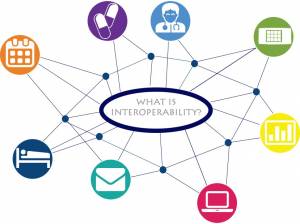
One of the problems with current supply chain technology is not having the ability to integrate data across every partner along the way.
In contrast, blockchains are built as distributed systems that maintain a unique and transparent data repository. Each party in the network contributes to adding new data and verifying its integrity.
This means that all parties mixed up in network. So one company can easily verify the information being broadcasted by another.
Replacing Electronic Data Interchange Systems
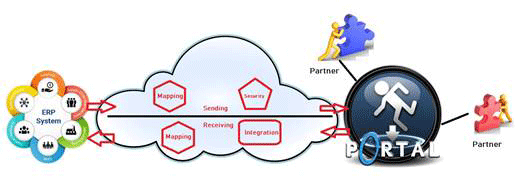
Many businesses rely on Electronic Data Interchange (EDI) systems to send information together. However, this data fades in timed batches as opposed to in real-time.
If a shipment goes missing or changes in pricing, other participants in the supply chain will get these records by involving parties. Also, read how AI will shape the ongoing future of the internet.
Transparency
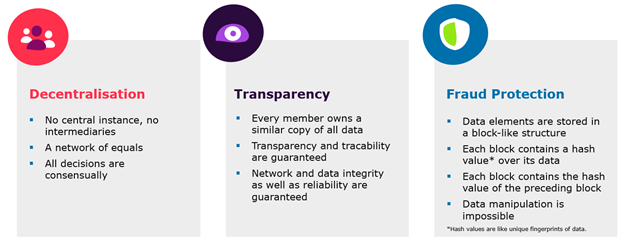
The blockchain is a shared database that ensures honest transparency.
All partners have the duty to upload their information and data about the product. A digital assortment of accurate data improves accountability and trust between partners. Blockchain technology can show updates to the product in only minutes.
Everyone involved knows wherever a product stands at all times. You can see wherever a product is, how it’s being made, and when it will likely be delivered all in one place.
Streamlined
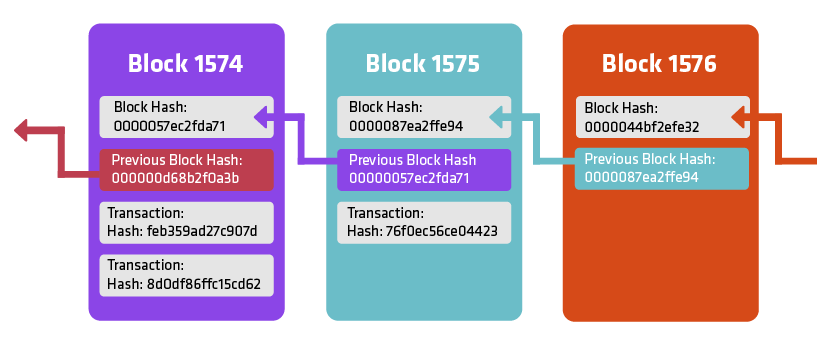
All of the logging a part of the digitally done blockchain.
This leads to less administrative work and more consistent and speedy data tracking. With the blockchain, you cut out the middleman and sign on to the blockchain to immediately download information. Everything is in one spot, making communication and operations highly streamlined.
The blockchain is global and scalable. The technology can support global partnerships and communications just like fast as regional partnerships. This helps it be the ideal solution for an economy of globalization.
Enhanced Analytics
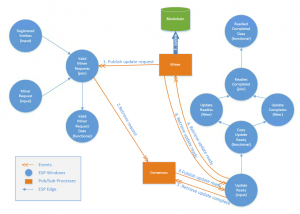
The blockchain offers complex methods to analyze the uploading data.
Blockchain can help create forecasts and predictions predicated on previous data, and it makes it possible for users to pinpoint legs in the supply chain.
These data analytics are proving invaluable to businesses who want to minmise supply chain expenditures and grow their businesses.
Customer Satisfaction
The blockchain technology may also use to enhance customer satisfaction. Business owners may use the blockchain database to see where items come in production and shipment to create a delivery timeline because of their customers. It also has a social advantage.
A clothing brand with a dedication to fighting sweatshops may give their customers use of the blockchain. Showing them a social consciousness approval form, and a labor union sheet.
A World of Potential
The Wall Street Journal recently posted articles that exclaimed, “after initial tests, 12 of the world’s biggest companies, including Walmart and Nestle, are building a blockchain to remake how the industry tracks food worldwide.”
The blockchain is revolutionizing the financial world. It’s merely a matter of time until it takes over every other industry.
A technology such as this is a generational technology, something which will change how a world works. The blockchain technology will update a 200-year-old system which makes it more reliable, secure, and transparent.