



When it comes to “essential” services during the coronavirus outbreak, few dispute trash collection is at the top of the heap.
And like grocers, pharmacies and other businesses considered crucial, the waste management sector in Vermont is grappling with how best to keep both workers and customers safe.
While most of Vermont’s 16 solid waste districts had reported few issues since the outbreak, that changed Friday when the largest district took strong action.
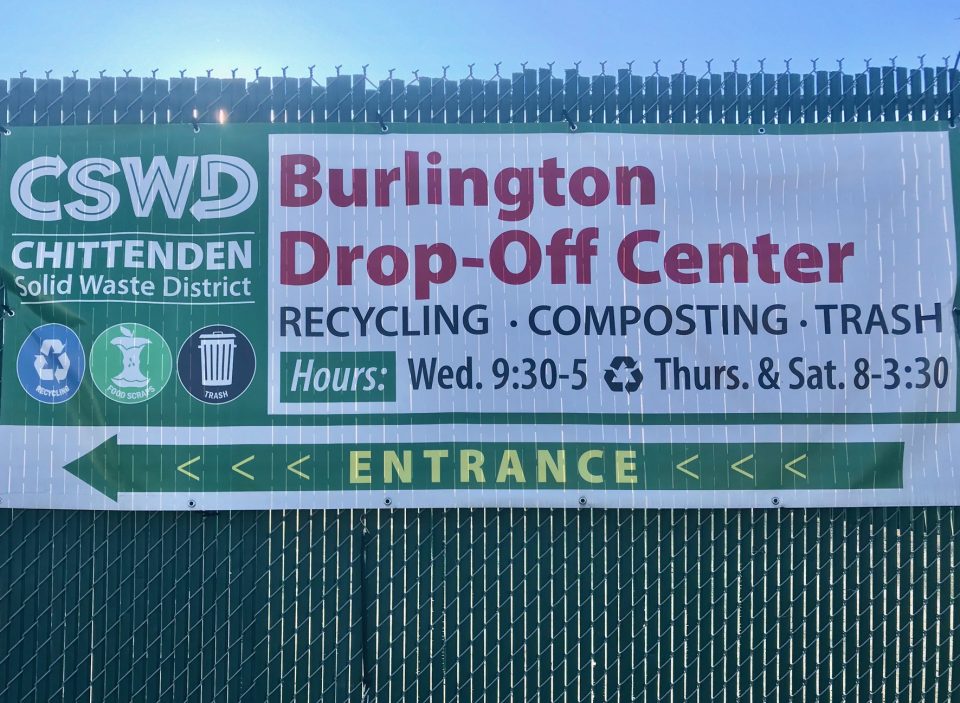
After determining that some employees were exposed to an individual who tested positive for COVID-19, Chittenden Solid Waste District has closed all but its Williston drop-off center. Outreach coordinator Michele Morris stressed that no staff in the district, which includes Burlington, had yet tested positive, but said the district is short staffed after asking the exposed employees to self-quarantine.
In addition to Burlington, the district closed the drop off sites in Essex, Milton, Hinesburg, Richmond and South Burlington.
In line with DEC guidelines, the CSWD Williston site will only be accepting household trash, “blue bin recyclables” and food scraps for now, said district outreach coordinator Michele Morris. (Nearby Green Mountain Compost is still taking yard waste and food scraps for free.) And the district is replacing its per bag fee with a $10 flat fee for up to four bags of trash starting Saturday to encourage residents to make fewer trips and follow Gov. Phil Scott’s order to “stay home, stay safe.”
“We need to be moving people through these facilities very quickly with minimal contact with each other and with our staff,” said Morris.
On the CSWD website: “We agree that hanging on to trash for too long can be a health hazard depending on the circumstances. Food waste is typically the most problematic material. To minimize the health risk, we encourage everyone to start managing their food scraps separately from their trash.”
VTDigger is underwritten by:
Meanwhile, some towns in the Northeast Kingdom — including Derby, Sutton and Sheffield/Wheelock — have temporarily stopped accepting recycling at their drop-off centers, said Paul Tomasi, executive director of the 49-member NEK Waste Management District.
Although single stream recycling is now the norm in Vermont, most Northeast Kingdom residents still self-sort their recyclables. Since residents have to come in and drop off their recyclables in different bins, some towns in the NEK thought it would be too challenging to socially distance in their small recycling centers, said Tomasi.
But now he’s concerned that the district-operated Lyndonville recycling center could see an uptick in drop-offs from residents in other towns.
“So we’re trying…to figure out how best to address that, if we have an attendant wait in the parking lot and kind of limit the flow in and out of the facility,” he said.
Cathy Jamieson, solid waste program manager at DEC, said Vermonters with more time at home might be tempted to start spring cleaning. But to help drop-off centers who may face staffing constraints, she suggested residents hold off disposing of hazardous waste, electronics and unwanted furniture amidst the coronavirus outbreak.
“That can of used paint probably has been sitting there for a while, and we’re glad that they’re thinking about where that should go, but we’re kindly asking them to hold on to it for a little bit longer and then responsibly manage it once the state of emergency has been lifted,” said Jamieson.
The state Department of Environmental Conservation also has also said retailers can stop redeeming soda bottles, beer cans and other “bottle bill” containers until the end of April so they can focus on restocking their shelves and limit staff contact with customers.
Peter Gaskill, general manager of Brattleboro waste hauler Triple T Trucking, said — in addition to renewed emphasis on glove wearing and hand sanitizing — the main change to his business thus far has been less waste coming in from commercial customers.
Gaskill said he will “triage” any staffing shortages as the need arises and couldn’t predict where shortages would occur.
“I mean, I definitely have a hierarchy in my head of what we’re going to accomplish first,” he said. “And recycling and compost go out the window pretty quickly.”
Vermont’s largest waste management company, Casella Waste Systems, which owns the Coventry landfill and the state’s two single stream recycling facilities, has not made any service changes, said Joe Fusco, vice president. In a tweet Friday, Casella did ask customers to make sure to completely bag their trash to help contain their waste when it is collected.
With restaurants around the state closing down or switching to take-out during the coronavirus outbreak, food scrap generation from Vermont businesses has already gone down, operators said.
The Windham Solid Waste Management District, which operates the state’s second-largest composting facility, has seen a “decrease in tons” from now-closed schools and restaurants, said executive director Bob Spencer.
Certain businesses are already banned from trashing food scraps, and that prohibition will extend to all Vermonters on July 1 per the state’s 2012 Universal Recycling Law. Jamieson, of DEC, said the state is not advocating to push that date back because of the pandemic.
VTDigger is underwritten by:
“We’ve been working eight years toward that ban — a lot of facilities have geared up and businesses are ready,” she said, adding that DEC “fully anticipates” the state of emergency will be over by then.
Worker safety
Nationally, waste collectors have called on municipalities and large waste management companies to offer measures like additional safety gear, additional sick leave and hazard pay.
They’ve argued that the workers are at heightened risk for infection as they have to visit hundreds of homes and businesses a day, and handle potentially contaminated surfaces.
Dr. Scott Gottlieb, former head of the federal FDA, referred to the novel coronavirus as “sticky” during a recent CBS interview.
“We’re learning that much more of the transmission probably happens from touching contaminated surfaces,” he said.
CDC and OSHA have not issued any additional guidance for waste collectors handling municipal waste and recycling beyond normal protective measures, according to Waste Dive.
Waste hauling company owners, solid waste district managers and state officials in Vermont say that with respiratory transmission being the primary vector for disease transmission, social distancing measures and a renewed emphasis on ongoing safety measures should protect workers.
“The basic practices used by sanitation workers are exactly the practices you would need to protect your workers from the coronavirus,” said Jamieson, of DEC.
Fusco, of Casella, said that it was a top priority for the company to have employees “healthy and ready to do” the essential service of waste management.
“So a lot of the things we do, we’re used to doing, but we have to do them with an increased level of urgency and focus,” he said. Casella has also made changes to its sick leave policy to accommodate additional time off needed for a COVID-related quarantine.
Like many industries around Vermont, the waste management sector has cut down on staff time in offices to the extent feasible. Joe Trask, of Fairfax-based Duffy’s Waste and Recycling, said that his company was now sending digital routes to haulers so they would not have to come back to the central office.
Don’t miss a thing. Sign up here to get VTDigger’s weekly email on the energy industry and the environment.
