

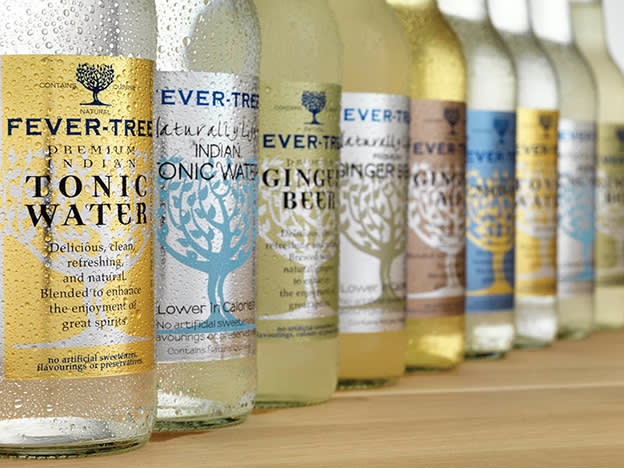
- Margins have fallen for fifth consecutive year, down to 20.2 per cent
- US market now accounts for a quarter of sales, after fast growth in 2021
Optimism over the return of drinking in pubs and bars was not enough to forestall another fall in profit margins at Fevertree Drinks (FEVR), with the Aim-traded company lowering its profit expectations for 2022 as the costs of sea freight and bottling continue to rise.
The high-end tonic maker’s Ebitda is now expected to come in between £63mn and £66mn in 2022, 8 per cent lower than the previous estimate of £69m-£72mn, owing to “significant uncertainty in relation to input costs in the short term” caused by the Russia-Ukraine war.
It also posted a fifth consecutive fall in adjusted cash margins, which slumped to 20.2 per cent in 2021, from a high of 35 per cent in 2016. The luxury mixers company put up prices in the UK, but this was not enough to offset higher product and logistics costs, which have risen by 15 per cent and 50 per cent, respectively, between 2019 and 2022.
The cost of shipping products to the US, where Fevertree now makes a quarter of its sales, was responsible for the largest cost increase, but the burden should be reduced as production ramps up at local bottling and canning facilities on the western and eastern coasts of the US.
Margins aside, there were encouraging signs on the sales front. Over the past two years, pandemic restrictions have taken a toll on sales in pubs and bars (the ‘on-trade’ segment), which was still at around two-thirds of pre-pandemic levels in the UK in 2021. Nevertheless, strong sales for drinking at home and 33 per cent growth in the US market helped produce double-digit revenue growth, which management expects to continue in 2022.
“There has never been more excitement around enjoying long mixed drinks at home,” said Fevertree, noting the long-term trend of consumers opting for more expensive ‘premium’ beverages across its key markets in the UK, Europe and the US, which have all grown at a compound annual growth rate (CAGR) of more than 10 per cent over the past three years.
At the same time, a long-awaited on-trade recovery has started to show in Fevertree’s largest market in the UK, where sales returned briefly to 90 per cent of pre-pandemic levels at the end of November, before being hit by the spread of the Omicron variant.
Jefferies kept its target price of 3,100p based on Fevertree’s “long-term growth as a leveraged play on spirits premiumisation trends”, adding that reduced profit guidance “should not come as a surprise to the market” given the recent intensification of inflationary pressures.
The outsourced business model underpinned a year-on-year increase in cash resources, so management felt able to recommended a special dividend of 42.9p a share.
Despite the shares falling by nearly 40 per cent since the start of the year, the stock is still expensive on a forward price/earnings ratio of 39.4. You could argue that historical performance justifies the lofty valuation, but elevated input costs are likely to constrict profits for the foreseeable future. More evidence is needed that it can get its profit margins under control, so we move to hold.
| FEVERTREE DRINKS (FEVR) | ||||
| ORD PRICE: | 1,589p | MARKET VALUE: | £1.85bn | |
| TOUCH: | 1,587-1,590p | 12-MONTH HIGH: | 2,871p | LOW: 1,480p |
| DIVIDEND YIELD: | 1.0% | PE RATIO: | 41 | |
| NET ASSET VALUE*: | 242p | NET CASH: | £163mn | |
| Year to 31 Dec | Turnover (£bn) | Pre-tax profit (£mn) | Earnings per share (p) | Dividend per share (p) |
| 2017 | 170 | 56.4 | 39.5 | 10.65 |
| 2018 | 237 | 75.6 | 53.4 | 14.50 |
| 2019 | 261 | 72.5 | 50.5 | 15.08 |
| 2020 | 252 | 51.6 | 35.9 | 15.68 |
| 2021 | 311 | 55.6 | 38.3 | 15.99 |
| % change | +23 | +8 | +7 | +2 |
| Ex-div: | 06 Apr | |||
| Payment: | 27 May | |||
| NB: Management declared a special dividend of 42.9p a share for 2021. | ||||
Last IC View: Buy, 2,327p, 18 March 2021.
