


To print this article, all you need is to be registered or login on Mondaq.com.
On 18 May 2020, the Beijing High People’s Court, handed down
its judgment on the administrative litigation concerning the
invalidation filed by Tencent Technology (Shenzhen) Co., Ltd.
against the trade mark registration No. 16715668 for 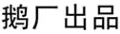 in Class 9, which was
filed in the name of Baoding Hua Yu Electromagnetic Wire Co., Ltd.
With this ruling came the end of a two year dispute over the mark,
which means ‘produced by Penguin Factory’.
In its judgment, the Court ruled that Tencent was successful in
showing that, prior to the application date of the disputed mark,
the Chinese public associated the term
”鹅厂’ (‘penguin factory’, the
first two Chinese characters in the disputed mark) with Tencent and
hence, Baoding Hua Yu had no right to register a trade mark
comprising the Chinese characters ‘鹅厂’.
Accordingly, and since Baoding Hua Yu also filed a number of
applications for marks which included Alibaba’s and Baidu’s
nick names ‘猫厂’ (‘cat factory’) and
‘狼厂’ (‘wolf factory’), the Court
decided that Baoding Hua Yu had obtained the registration of its
‘Penguin Factory’ mark “by other illegitimate
means” as prescribed by Article 44.1 of the 2013 Trade Mark
Law and invalidated the trade mark registration.
As the Court’s verdict was based on the Baoding Hua Yu’s
bad faith, it marks a welcome addition to recent decisions from
Chinese courts to curb bad faith filings, which have plagued the
Chinese IP system for a long time.
The Beijing High People’s Court’s decision was, however,
rather remarkable under another aspect. The Chinese words
”鹅厂’ (‘penguin factory’) ,
‘猫厂’ (‘cat factory’) and
‘狼厂’ (‘wolf factory’) are nick names
of the well-known Chinese Internet giants, Tencent, Alibaba and
Baidu, as their mascots and logos  ,
,  and
and  are related to these
animals. Although the companies do not commonly use the nick names
in their own communication or to mark their products, they had
certainly become aware of them. Out of an abundance of caution,
they secured some trade mark protection for their nick names with
the Chinese trade mark office, although they did not cover all
categories of products with their trade mark registrations.
It was predominantly the public and media who used the nicknames
to refer to Tencent, Alibaba and Baidu. In a legal context, this
type of use has been deemed to be ‘passive use’ and not
proper trade mark use by the brand owner, and normally, the brand
owner could not claim rights to a nick name if it was created by
the public or the media.
The Beijing High People’s Court, however, had set a new
trend in April 2019 when it first issued its own Guidelines for the
Trial of Trademark Right Granting and Verification Cases (2019) to
acknowledge that the use of a trade mark by others may be
sufficient to defend a mark against a non-use cancellation,
provided that the use is not an impediment to the owner of the
trade mark and the owner has not specifically objected to such
use.
In its recent judgment, the Court first had to acknowledge that
Tencent did not own prior registrations for its nick name in
relation to the relevant goods and therefore, technically, Baoding
Hua Yu’s ‘Penguin Factory’ mark would not infringe
Tencent’s rights. Setting this aside, the Court adopted the
notion of ‘passive use’ of a trade mark and acknowledged
that a nickname, which was created by the public in the first place
and became popular, was a brand owner’s valuable asset and
worthy of being protected including against unauthorised filings
and use by other traders.
In this decision, the Court not only recognised the obvious bad
faith of the defendant, who had the intention of free riding on
Tencent’s reputation, it also came up with a practical solution
for affording protection to Tencent’s unregistered mark as a
result of ‘passive use’.
For brand owners, it may be comforting that, contrary to popular
belief, unregistered marks can be protected in China. Nevertheless,
the main takeaway from the decision should be that filing
applications to register IP in China remains the key measure for
brand owners to take before entering the Chinese market to avoid
disputes over ownership of the IP. If one or more nicknames already
exist, devised by the public or local distributors or agent, then
effort should be made to choose one version for which an
application for registration as a trade mark for the relevant goods
and services should be filed with the China National Intellectual
Property Administration as soon as possible.
Source: Beijing High People’s Court Administrative Judgment
(2019) Jing Xing Zhong No.10063 (
http://wenshu.court.gov.cn/website/wenshu/181107ANFZ0BXSK4/index.html?docId=275adb76671b480db4e9abc7000d6d97)
The content of this article is intended to provide a general
guide to the subject matter. Specialist advice should be sought
about your specific circumstances.
POPULAR ARTICLES ON: Intellectual Property from China
