

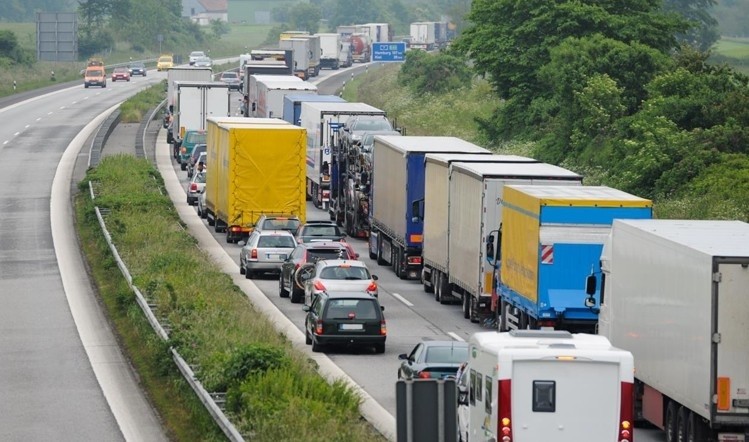
Writing a blog on the World Economic Forum website, Rogers – who supplies plant-derived coatings to keep produce fresh – argued that there must be a living supply chain for foods highlighting that the supply chain for perishable goods has been shown to be vulnerable.
He added that policymakers, innovators and international leaders agree that there must be different pathways to ensure food security and move beyond the current status quo of prioritising efficiency over security.
Field-to-fork
“The global population is growing, therefore, a static food chain cannot keep up the pace to reach everyone in time,” he argued.
As the supply chain is now appreciated for food’s field-to-fork journey disruptions to this stir discussion, which indicates that people value food differently, he argues. This means that availability and supply resilience, not just price are recognised.
Rogers said: “Food businesses must replicate these value judgments to win the market. In the face of climate change and growing food insecurity, successful strategies necessarily consider the potential for environmental or societal disruption. These costs have not been part of the ‘cost of doing business’ equation until now.”
Supply chains as ecosystems
He argued that it is important understand supply chains as ecosystems dependent on people, natural resources and their interactions. This will then allow enable suppliers, sellers, policy makers and consumers to see themselves as links in the chain.
“The old food supply chain is dead. It’s time to prove the world’s most visible issue is also the most solvable. It’s time to build the living supply chain together,” he said.
“To understand the food system as the singular, unifying force for people on our planet. To ensure the food we produce reaches those who need them and can sustain livelihoods for producers and system workers. For positive system disruption to work, we need everyone to participate in the living supply chain that connects and links us all.”
