

The price of goods and services is rising at rates not seen since the early 1980s as inflation rates continue to rise.If you’ve been shaking your head at the grocery store check-out or endured pain at the pump, you’ve felt the impact of inflation.”Inflation is simply the price that we pay for similar goods over a period of time,” said Brian Gottlob, of the Economic & Labor Market Information Bureau.That increase has now reached its highest level in four decades. Economists say there are two major factors currently driving inflation. One was the government response to the COVID-19 pandemic in the form of monetary policy and relief funds to help sustain the economy. “To the tune of $2 trillion. That increased the supply of money,” said economist Reza Jalili, of New England College. “At the same time, we had the Federal Reserve, the central bank of the United States, increase the liquidity in the system, the amount of cash in the system, and brought the interest rates to almost zero.”Those lower rates pumped billions more dollars into the economy.Then, economists say the second factor — also related to the pandemic — kicked in. Global supply chains became snarled and delayed, meaning that in the U.S., a nation of consumers, supply is not meeting demand.”We can’t get the parts, we can’t get the commodities that we need and, as a result of that, when there’s shortages of those things, prices rise,” Gottlob said.”This is when we say there’s too much money chasing too few goods,” Jalili said.That supply shock is still being worked out. But food and energy costs, which are not included in the Consumer Price Index that measures inflation, are facing even greater volatility due to other considerations, such as the war in Ukraine.Economists say once inflation gets embedded in the economy, there are limited policy options when it comes to fixing what is a complicated problem.”The one that we’re going to see this year is rising interest rates,” Gottlob said. “Slow the economy. The idea is when you slow the economy and slow the demand for goods and services, then prices will rise less.””My guess is they’re going to stop this inflation before it gets to what we call hyper-inflation,” Jalili said. “It’s going to hurt a little bit, but I think they’re going to control it, because the federal reserve is already on it.”
The price of goods and services is rising at rates not seen since the early 1980s as inflation rates continue to rise.
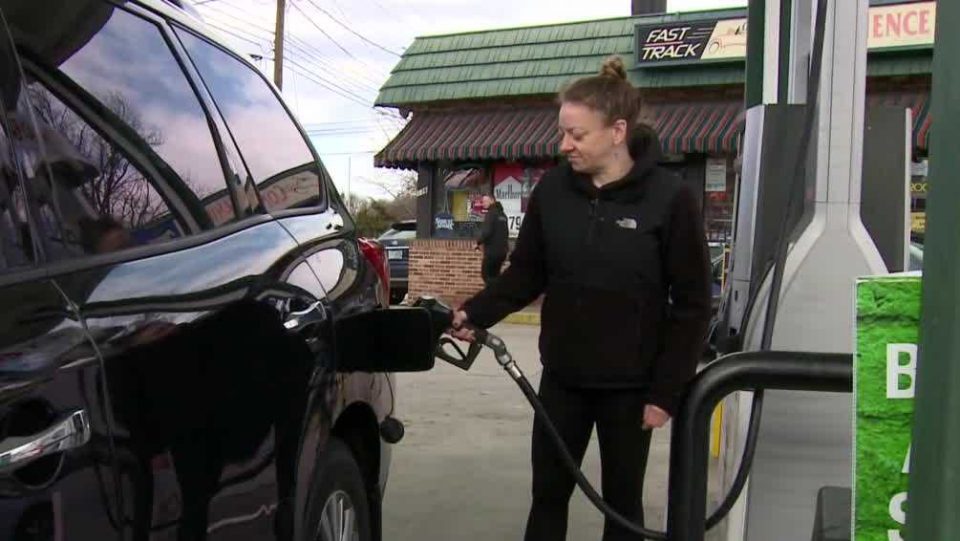
If you’ve been shaking your head at the grocery store check-out or endured pain at the pump, you’ve felt the impact of inflation.
“Inflation is simply the price that we pay for similar goods over a period of time,” said Brian Gottlob, of the Economic & Labor Market Information Bureau.
That increase has now reached its highest level in four decades.
Economists say there are two major factors currently driving inflation. One was the government response to the COVID-19 pandemic in the form of monetary policy and relief funds to help sustain the economy.
“To the tune of $2 trillion. That increased the supply of money,” said economist Reza Jalili, of New England College. “At the same time, we had the Federal Reserve, the central bank of the United States, increase the liquidity in the system, the amount of cash in the system, and brought the interest rates to almost zero.”
Those lower rates pumped billions more dollars into the economy.
Then, economists say the second factor — also related to the pandemic — kicked in. Global supply chains became snarled and delayed, meaning that in the U.S., a nation of consumers, supply is not meeting demand.
“We can’t get the parts, we can’t get the commodities that we need and, as a result of that, when there’s shortages of those things, prices rise,” Gottlob said.
“This is when we say there’s too much money chasing too few goods,” Jalili said.
That supply shock is still being worked out. But food and energy costs, which are not included in the Consumer Price Index that measures inflation, are facing even greater volatility due to other considerations, such as the war in Ukraine.
Economists say once inflation gets embedded in the economy, there are limited policy options when it comes to fixing what is a complicated problem.
“The one that we’re going to see this year is rising interest rates,” Gottlob said. “Slow the economy. The idea is when you slow the economy and slow the demand for goods and services, then prices will rise less.”
“My guess is they’re going to stop this inflation before it gets to what we call hyper-inflation,” Jalili said. “It’s going to hurt a little bit, but I think they’re going to control it, because the federal reserve is already on it.”
