

By Oracle Netsuite ·
February 17, 2022
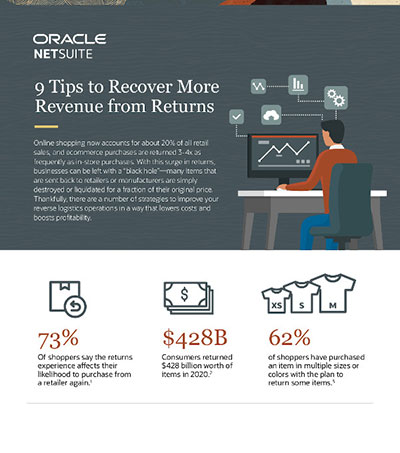
Online shopping now accounts for about 20% of all retail sales, and those purchases are returned 3-4 times as frequently as in-store purchases. This surge in returns can results in a “black hole” as many returned items are simply destroyed or liquidated for a fraction of their original price.
Thankfully, there are a number of strategies to improve your reverse logistics operations in a way that lowers costs and boosts profitability. Check out this infographic to uncover 9 strategies to help your business recover more revenue from returned purchases.
For many products-based companies, returned goods are an afterthought. Too often, recovering as much money as possible from these orders is not the priority; speed and convenience are.
This infographic dives into 9 strategies and tips to improve your reverse logistics operations in a way that lowers costs and boosts profitability, such as:
- Improve inventory visibility to increase the chances of reselling products at full price and minimize obsolete inventory.
- Create the right returns policy that isn’t so lenient that people will take advantage of it but also isn’t strict enough to deter initial or repeat purchases.
- Reuse, recycle and salvage to build positive brand equity with customers while also saving money.

Subscribe to Supply Chain Management Review Magazine!
Subscribe today. Don’t Miss Out!
Get in-depth coverage from industry experts with proven techniques for cutting supply chain costs and case studies in supply chain best practices.
Start Your Subscription Today!
