

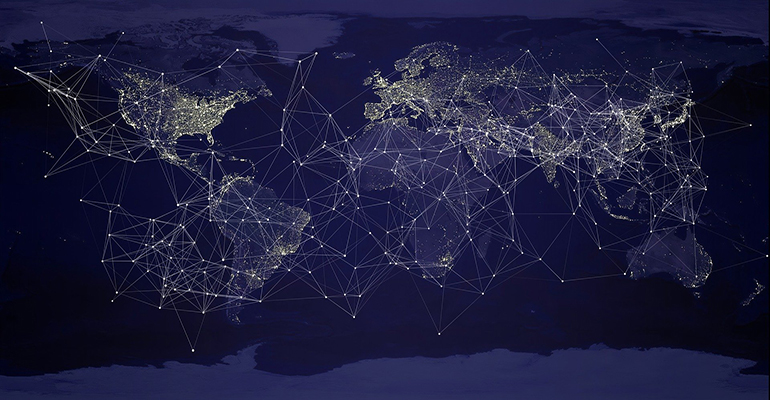
Today’s catalysts – COVID-19, Brexit, climate change, industry 4.0, among others – are putting supply chains in more headlines than ever and while some of these disruptors may eventually become footnotes in history, it would be foolhardy to think major change won’t continue or that we won’t need an approach to planning robust enough to withstand more change of this magnitude.
We need to approach planning fundamentally differently and to understand what the road ahead looks like, it makes sense to put some common, recurring myths to bed.
Myth #1: Increasing accuracy is more important than increasing agility.
Too many companies have become obsessed chasing the perfect plan; that accuracy is the measure of success. What COVID-19 and other global disruptions have taught us is that accuracy can only take you so far – you need to have the agility to pivot and respond quickly to what’s happening in the real world. The most successful supply chains have found the right balance of accuracy and agility to streamline day-to-day efficiencies and be in a position to act quickly when change happens.
Myth #2: Optimising each chain link independently optimises the whole chain.
Historically, there has been a focus on the functional excellence of each individual link in the supply chain as a means of improving the entire system, ignoring the vital relationships and contingencies between links. The practice has grown out of allowing every functional leader to choose their own path and be the master of their own silo. While it may lead to performance improvements in a single area, it doesn’t truly improve the whole system. Real progress can be made when the supply chain is treated as a synchronised whole, instead of disconnected individual parts.
Myth #3: End-to-end visibility creates understanding across and between functions.
End-to-end supply chain visibility is just the first step – it’s vital but it does not form a path to full alignment. Transparency – the ability for each link in the chain to understand what’s happening across the whole chain and react synchronously – creates true alignment. Companies effectively preparing for future disruptions are creating multiple scenarios to gauge the impacts on and between each element of the supply chain before they happen.
Myth #4: Artificial Intelligence (AI) is the silver bullet of all of today’s challenges.
Hype around the wonders of AI and how it can lead to “lights out” planning is everywhere. AI and machine learning play an important role in helping companies learn from past decisions and automating routine and obvious tasks. AI, however, is not a replacement for people, it’s a way to augment them. Math run by machines should not be the only way to make decisions: when faced with the unexpected, the supply chain planner will have to use human intelligence to make decisions with the context, collaboration, and conscience that AI doesn’t have.
Myth #5: No two supply chains are alike.
In a sense, every supply chain is unique, but they all suffer from a common condition – experiencing volatile supply and/or demand for things that are constrained. This underlying truth makes them more alike than we realise. Rather than looking for custom planning solutions, planners should instead invest in more fundamental ways of changing their approach: built-in flexibility, greater transparency and increased agility are important foundations for mitigating a volatile supply chain.
The road ahead
With the myths busted, it is worth stressing a broader imperative: the traditional cascading model of supply chain planning needs to be replaced with a concurrent approach that fosters truly holistic transparency across every function of the supply chain. As disruptive as recent global events have been, they are offering us a perfect opportunity to make real changes in how we approach supply chain planning and ensure we’re ready for the next big disruption.
