

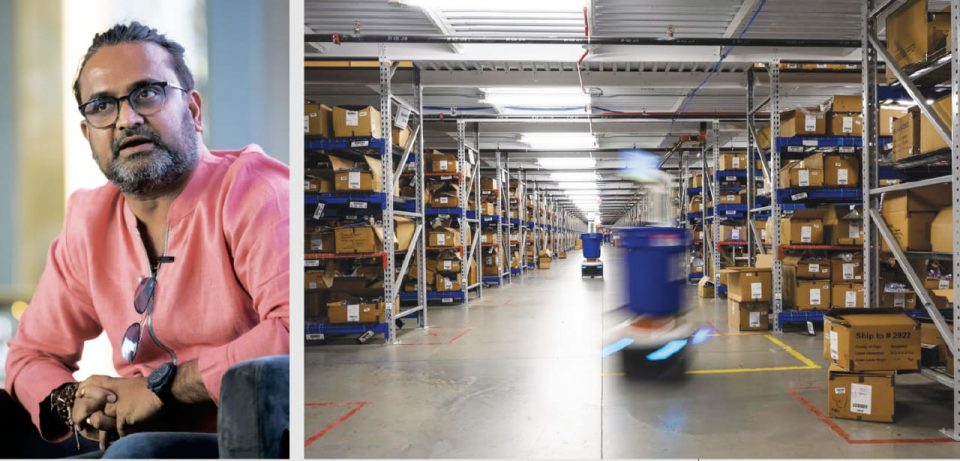
Supply chains—the increasingly vast and complex networks that link companies with their suppliers—have been a hot mess since the pandemic started. But not so for American Eagle Outfitters.

While other companies were tied up in supply snarls, the Pittsburgh, PA-based clothing and lifestyle retailer was reimagining its supply chain: developing a revolutionary, open-network model and turning it into a thriving business line. Today, 50 companies share its platform—helping them improve inventory security, make faster deliveries, and boost efficiency.
“We saw very early where the world was heading with supply chains,” says Shekar Natarajan, American Eagle’s chief global supply chain officer. “We developed a very bold vision and empowered our people to create it.”
This vision—and the company’s approach to turning that vision into a transformative and profitable product—have earned American Eagle a place on Fast Company‘s 2022 list of Best Workplaces for Innovators.
INTERNET PRINCIPLES
American Eagle had begun reinventing its supply chain prior to the pandemic, moving facilities closer to customers and diversifying transportation. These steps yielded positive results, but Natarajan and CEO Jay L. Schottenstein had a much bigger vision.
Natarajan likens traditional supply chains to computers before the internet. “Everyone has their own pipe and no one’s system talks to the others,” he says. “We took what works for the internet and applied it to the physical world, creating a decentralized way of sharing supply chain information.”
Building that platform took big thinking—as well as some big investments. In 2021, American Eagle purchased two supply chain-related companies, AirTerra and Quiet Logistics. The latter was acquired for $350 million.
“We made the biggest acquisition in the company’s history in the middle of a pandemic,” recalls Natarajan. “And it wasn’t a brand—it was a supply chain company. That’s how much Jay and our board believed in this.”
To maximize their human capital, American Eagle went through an extensive talent exercise during the first quarter of 2021, not to cut heads, but to identify each individual’s talents and place them where they would have the greatest impact.
“This process unleashed the talents of all these amazing people,” says Natarajan, noting that the team executed 60 projects last year.
IMMEDIATE IMPACT
The results for American Eagle were eye-opening. The company reduced parcel miles by two billion, time to deliver to stores by 80%, transit days to the consumer by 35%, and cost per package by $1.50. The company’s profitability doubled—due, in part, to savings of $360 million in freight and markdowns, and an 18% jump in productivity.
These results drove home the value of the company’s vision, spurring the executive team to offer participation in their supply chain network to other companies. The potential benefits are vast—for example, the ability to send one package instead of 10, or to pay delivery companies with a single consolidated transaction.
American Eagle’s success offers a classic example of opportunity in crisis. “The beauty of this innovation is that we were doing it when supply chains were most distressed,” Natarajan says. “We were maximizing the value of inventory just as people couldn’t get their hands on inventory. The power of the network was unleashed.”
