

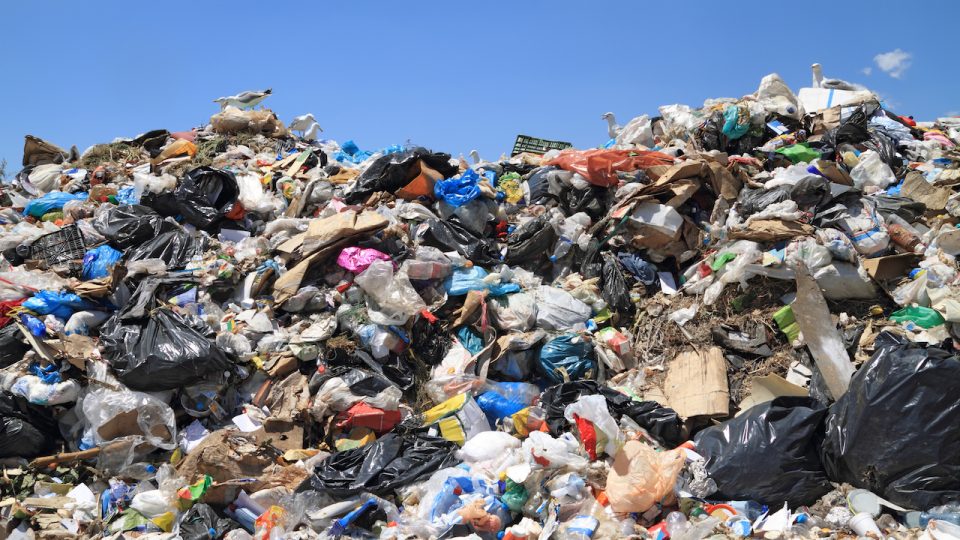
You can’t blame a man for having interests. I have always been weirdly interested in waste management. Partly, this is because it has long formed a part of my father’s professional life. (In the interest of full disclosure: I myself currently have no financial stake in it, although I obviously wish the old man well in his endeavours.) Part of it is also just having a genuine fascination with the nuts and bolts of how a civilization runs. Fast, efficient handling and removal of solid waste and human sewage are a big part of what allows our civilization to exist. Earlier eras in human history would have been, not to put too fine a point on this, as smelly as they were dangerous to your health. Getting rid of waste, whether human or simply trash, allows us to live in big, densely populated cities.
And in Ontario, we’re really having a struggle getting this extremely basic job done.
I confess it is nice to write about something a little less tragic than a pandemic or possible military conflict with Russia. Indeed, not long before the pandemic, I wrote a whole series about waste management for TVO.org in which I laid out some of the numbers relating to how much waste we produce and how difficult it can be to process all of it in a timely and affordable way.

Our journalism depends on you.
You can count on TVO to cover the stories others don’t—to fill the gaps in the ever-changing media landscape. But we can’t do this without you.
Without completely repeating the work of that series, suffice it to say that Canadians throw out an absolutely astonishing amount of stuff. We really are bad at this, by global standards. We produce way, way too much trash. We then have to figure out what to do with it; we typically divert and process organics, sort and sell off recyclable materials as useful raw materials, and throw trash in a dump and bury it. There are numerous problems with this approach, including the fact that Canadians aren’t good at sorting trash, so a lot of what could be diverted ends up buried.
Also, changes in the global marketplace for recycled goods have made it harder to find buyers for our blue-bin refuse; even when buyers can be found, the costs have gone up. This is putting pressure on municipal budgets that were counting on an overly high price for their blue-bin material. If the economic model were to collapse, it’s possible that much or all of what is put into blue bins would eventually be tossed into a dump for lack of a willing buyer.
That is a very concise and imperfect summary of a very complicated system. I was amused and excited in recent weeks to see a series of stories pop up discussing the very real problems Ontario is facing with its waste-management approach. If you will permit me a somewhat tongue-in-cheek comment, you know normalcy is returning after a long period of crisis when journalists have time to pay attention to something as basic as waste management again. Nature is healing, and all that jazz.
My delight at those stories, though, was offset by the sneaking suspicion that we’re going to screw this up. The pandemic has taken a real toll, I suspect, on everyone’s ability to assume that the government is on top of the things it ought to be on top of. Ontario faces a pretty basic problem: we’re running out of landfills. Will we be able to do anything about this?
Despite all our efforts to divert a significant percentage of waste away from landfills, we are still left with a lot of trash that we need to deal with, and our primary way of dealing with it is burying it under the ground. We are going to begin running into real limits to our ability to do that in the next few years, certainly by the next decade. I know that sounds comfortably far away, especially at a moment in time when we have so many other problems to worry about, but the challenge for us here is that our regulatory process for approving new landfill sites is so long and convoluted and politically fraught that we may already be approaching, or even beyond, the red line of when we need to get the process started. If you’ve only got 10 years of landfill capacity left, and it takes 15 years to approve a new or expanded one, well, you can see the problem.
Again, this should be one of the easiest things our government will ever be asked to deal with. Waste management is logistically complicated in its details, sure. There are a lot of moving parts in the system, and they all need to be working in order for everything to go as planned. But the overall goal is actually really simple: you need a place to dump stuff you don’t want. Ontario doesn’t have those places. As was recently recounted in an excellent article in the Globe and Mail, recent regulatory changes brought in by the Doug Ford government have made it much, much harder to get local approval for creating new dumps. What ought to be a simple enough task is now depressingly complicated, and, as we’ve seen, we cannot take Ontario government competency for granted.
So what are we going to do? It’s not my job, as the mere scribbler, to decide policy. My purpose here today is simply to remind everyone that Canada generally and Ontario in particular have developed a bad habit of being caught flat-footed by problems that were not only foreseeable but also foreseen. Our problem of having too much trash and not enough places to put it is in no way insurmountable.
There are a ton of really effective and proven solutions to this problem. We could continue exporting trash to American landfills. We could make meaningful efforts to further increase diversion to organics- or recyclables-processing facilities. We could do everything possible to lower Ontario’s very high level of waste production, per capita. We could look at other options, such as incineration, which is routine in other parts of the world and can, when one of the more advanced systems is involved, even form part of local power generation. When trash displaces other carbon-intensive fuels, it can even result in reductions in greenhouse-gas emissions — you stop throwing trash in the ground, and you fight warming. This would be harder in Ontario, admittedly, where our electricity is fairly green already (thank you, hydroelectric and nuclear) but could still be considered as part of the solution. Trash is a sunk cost. Perhaps we should get some value out of it?
None of these solutions is perfect, and none of them is a silver bullet. An actual solution will require some combination of several or all of these. But we do not have a ton of time. Everyone is exhausted after two years of a pandemic, and everyone is or at least should be worried about what’s going on in Europe. But that does not mean we can afford to take a vacation — we have may other problems that need solving. I really wish I were not as worried about our ability to handle a crisis that is still 10 or 15 years away. But I am worried. This seems like the kind of ball we’ll end up dropping.
I would love to be proven wrong on this. So please, Progressive Conservatives, Liberals, New Democrats, everyone: please come up with a plan to deal with our garbage. It does not need to be a perfect plan. Almost any plan would do. Just don’t wimp out and ignore this because no one likes talking about garbage. Okay?
