

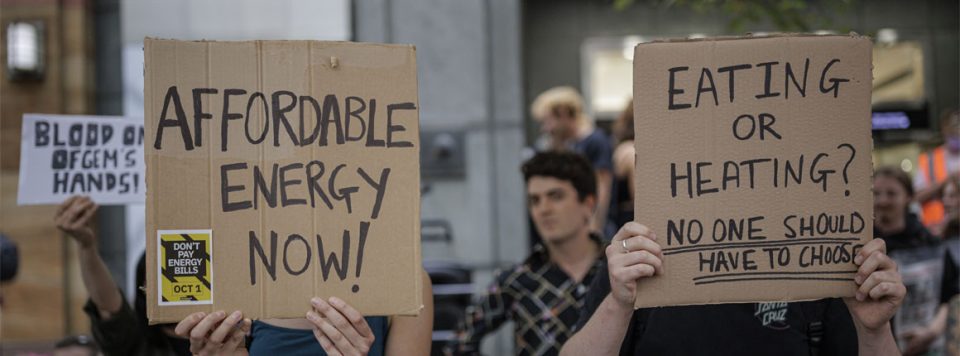
Skyrocketing energy costs are leaving procurement teams under pressure to find cost-saving opportunities.
High oil and gas prices are leading to record levels of global inflation, with insolvencies reaching the highest levels seen since the 2008 crash due to the rising costs.
The UK government has announced it will cap industrial prices to protect businesses from the brunt of the cost increases. The government has claimed this will cap prices at over half of the wholesale cost for industrial energy.
However, despite these measures businesses are still feeling the pressure.
Annette Rothwell, director of AR Procurement Services, warned “there is no silver bullet sadly” and “no one-size-fits-all” approach to overcome the energy crisis. However, there are measures procurement firms can make to ease the increasing energy cost pressures.
Simon Geale, executive vice president procurement at Proxima added: “Current market conditions, as well as the green agenda, are shining a light on just how much wastage there is in the flow from generation to usage. Understanding usage and leveraging that information to change behaviours, in order to be more energy efficient and reduce waste, is where the big impact will come from in today’s market.”
So what can procurement leaders do to manage energy costs?
1. Work with an energy consultant
Bringing in an external consultant to help find savings might be necessary considering the scale of the challenge posed by energy costs.
“I’d start talking to a specialist energy consultancy to make sure that you are buying smart – there is a vast array of know-how out there to help you to outperform the competition and limit the scale of cost impact. In the past this may have been a ‘maybe’, but the cost implications of today have made it a ‘must’,” said Geale.
“Buying smart is critical, and it may be time to engage specialists who can bring the data and insights that may not be available in house when making buying decisions or strategies.”
2. Evaluate contracts
Check existing contracts and when they expire and use this as a cost saving opportunity. Rothwell said: “If your contracts are due for renewal then shop around and look for the best deal you can find. Be sure to consider risk when looking at the security and duration for any new contracts. Work with other functions of the business to identify any improvements that can be made to reduce the amount of energy required.”
Oreri Daudu, manager consulting at PwC, said procurement professionals need to “rethink” their strategy in the volatile energy market.
“Specifically, procurement should be reviewing their energy contracts and looking at ways to forward-buy. Just as you lock your mortgage for a given period which shields you from the volatility of interest rates, procurement should be protecting their organisation in the current energy crisis by reviewing their energy contracts and locking it for a set- period such as two to five, or even 10 years.”
3. Communicate with suppliers
Rothwell said: “Working with suppliers is key. We are all in the same predicament. We need to ensure everyone survives these turbulent times. Everyone needs to make a profit in order to continue, therefore working throughout the total supply chain is the answer. It is important to understand the energy cost element of the total product or service cost. It is unlikely energy will be 100% of the total cost.”
While it might not be possible to implement every cost-cutting priority, open dialogue with suppliers can help generate new approaches to cutting costs.
She continued: “Look for areas of waste and under utilisation and remove it. Any savings should be shared. Track and monitor indices, this will help identify the trends when material and labour goes up and down and track performance. Be prepared to listen to suggestions from suppliers on how improvements can be made to reduce costs. It may not always be feasible to accept the suggestion however it may lead to another cost reduction idea.”
4. Approach the current situation like any other cost-saving strategy
Procurement teams should think about what they buy and how they work, Geale said, and “run an energy lens through that”.
He continued: “This is comparable to what we might ordinarily do when seeking cost, quality, process, or sustainability gains: ‘What do we do, where is there waste, what could I change?’ They should then work with suppliers and stakeholders to assess the practicality and impact and make those things happen.
“Impacts will range from things an individual can do, such as turn off their PC, to things an organisation can do, like controlling heating and lighting. There are also actions suppliers can take to make an impact, such as reconfiguring how things are made or done. Some are easier fixes than others, but a broad range of impacts will hold everyone accountable.”
☛ Want to stay up to date with the news? Sign up to our daily bulletin.
