

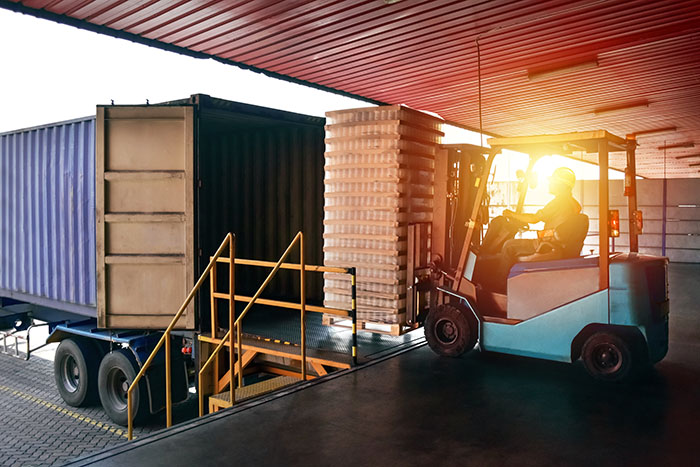
After demand outstripped available capacity for much of the second half of 2020, contract rates are expected to increase, but shippers that fail to turn containers quickly risk costs rising beyond those base rate increases. Photo credit: Shutterstock.com.
Following a year in which extended possession of containers by many US importers, often due to pandemic-impacted warehouse productivity, resulted in widespread equipment shortages, ocean carriers are signaling they will be specifically taking aim at reducing contracted free time in 2021–22 contracts.
To the extent carriers are successful, this will force many shippers to either accept higher per diem charges or take potentially difficult steps to adjust warehouse operations so they can unload and return containers to carriers more quickly. The move by carriers could also impact drayage, forwarders say, by resulting in fewer opportunities for two-way moves by drayage drivers.
The global container shortage, which resulted from cargo owners essentially slow-steaming the return of boxes, was one of the key factors in the larger container shipping breakdown that materialized last fall and is expected to continue well into 2021.
According to one carrier executive, who asked not to be identified, “There needs to be some pressure on shippers, mainly consignees, to move their boxes quicker — that is, by reducing free time and chassis free time, so that we can see that [is implemented] in the current contracting.”
The executive said the pressure on free time will not necessarily mean changes for all shippers, just those who tend to hold equipment for longer periods of time. To avoid higher costs, those shippers will need to examine their warehouse and distribution operations in greater detail.
“For some customers, it doesn’t mean anything, because they are managing with 8 days of free time even if they have 20 in their contract,” the executive said. “But for those who have 20 days and it comes down to 10, but they operate at an average of 15 days, that has an implication on their cost exposure; it reflects how effective they are in managing their warehouse and intermodal business.”
Others agree.
“This will force warehouses to be more rigid with appointment scheduling, missed appointment penalties, possibly even forcing drop/hook facilities to look at more live unloads so they don’t get stuck with per diem,” said Duncan Wright, president of Cleveland-based logistics provider UWL.
The focus on free time is part of a larger effort by carriers to reset expectations of shippers, who for much of the past decade enjoyed the benefits of systemic vessel overcapacity and carriers’ willingness to be competitive on contract terms to obtain shippers’ business. Carriers have signaled to US exporters, for example, not to expect free repositioning of empties to remote export origin locations. With carriers having consolidated and exhibiting discipline on capacity, rates will almost certainly go up, but shippers will be forced to address operational issues such as turning containers or risk costs rising even beyond those base rate increases.
“In previous years, carriers were compelled to agree to shipper requests like additional free time, extending credit terms, providing chassis, and making legal boilerplate exceptions to retain customers. However, in today’s market, it seems they are now in a position to regain ground in these areas and only compromise with the most influential shippers,” said Bryan Most, senior vice president of retail at the New York Shipping Exchange (NYSHEX), a digital platform on which shippers and carriers can arrange mutually enforceable ocean freight contracts. “With the continued strength of this market, shippers are most likely looking at higher contract rates this year, and if some of the carrier concessions are not available, they will also need to quantify that impact on their operations — in effect, possibly adding additional costs to the supply chain.”
The carrier executive said much the same thing.
“The balance is coming back in a way where it’s not just a one-sided negotiation. That is the crux of the matter now,” the executive said. “It started last year, when we took a look at the contracts not only in terms of freight rates but with regard to the broader terms, such as credit, free time, all the different aspects, and we have started, beginning last year, to rein in some of those very generous terms that were out there in the market.”
Wright believes carriers clamping down on free time will impact drayage operations, as quicker turning of containers would limit drayage drivers’ ability to handle the two-way moves they say are essential to their efficiency.
“The drayage market is just as strained right now as the ocean carrier market is and the free time impact will likely have as large if not a larger impact on them as it does on the receiver’s facility,” Wright said. “If free time is impacted, this will put a significant strain on drayage operations, as truckers will likely be forced to spend more time bobtailing [i.e., driving with no container] to pick up containers for large drop-and-hook operations to avoid per diem.”
Contact Peter Tirschwell at [email protected] and follow him on Twitter: @petertirschwell.
