

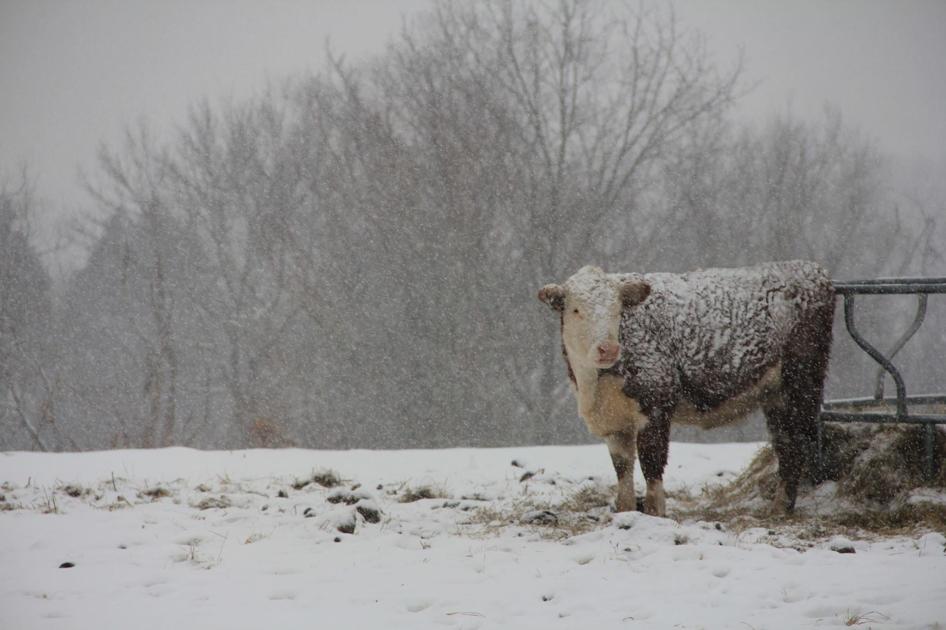
The cold weather and snow are in full swing, with several months of these climatic conditions ahead.
During this season, it is common to still see cows outside of a barn, perhaps even in the middle of a blizzard. While this may seem strange or concerning, it is important to remember that cows are better equipped to handle inclement weather than humans, and farmers closely monitor their animals for signs they are cold.
In order to manage in cold weather, cows have three primary adaptations.
First, cows will grow a thick, long-haired coat that insulates them from wind and cold temperatures. As long as their coat stays dry and clean, it will help protect them. If a cow is seen with a layer of snow on its back, that means its coat is doing its job and keeping the cold out.
Second, cows will increase their body weight as farmers feed them extra portions before the winter sets in to help them cope with the cold. While it is important to make sure cows don’t gain too much weight, a small increase that is managed by the farm’s nutritionist is helpful.
Third, cows experience increased metabolic rates to produce more body heat. This increase in body heat helps keep them warm and is made possible by the farmer feeding larger quantities during the cold season. Cows will convert the energy in their feed to body heat, keeping their internal temperature more stable.

Providing adequate amounts of feed and access to shelter combined with the cows’ physical adaptations can help them successfully cope with cold weather.
In addition, cows can be monitored for signs of cold stress. These can include cows gathering in tight clusters, decreased heart and respiration rate or body temperature, shivering, cold extremities (such as ears, udders, tails, hooves or legs) or rigid muscles. Cows are more at risk of being cold if they are skinny, their hair coat is wet or muddy or they are either very young or old.
If cows do not have adequate protection, frostbite is more likely to occur in sensitive body parts such as ears, udders, or hooves. Prevention and timely identification and correction of a problem are key during cold weather.
While cows are better adapted to cold weather than humans, farms should monitor their herd for signs of cold stress. With a little extra care, cows can manage colder temperatures in a safe and productive way.
(Alycia Drwencke is a dairy management specialist with the SWNY Dairy, Livestock and Field Crops Program. For more information about caring for dairy calves and cows in the cold, contact Drwencke at (517) 416-0386 or [email protected].)
