

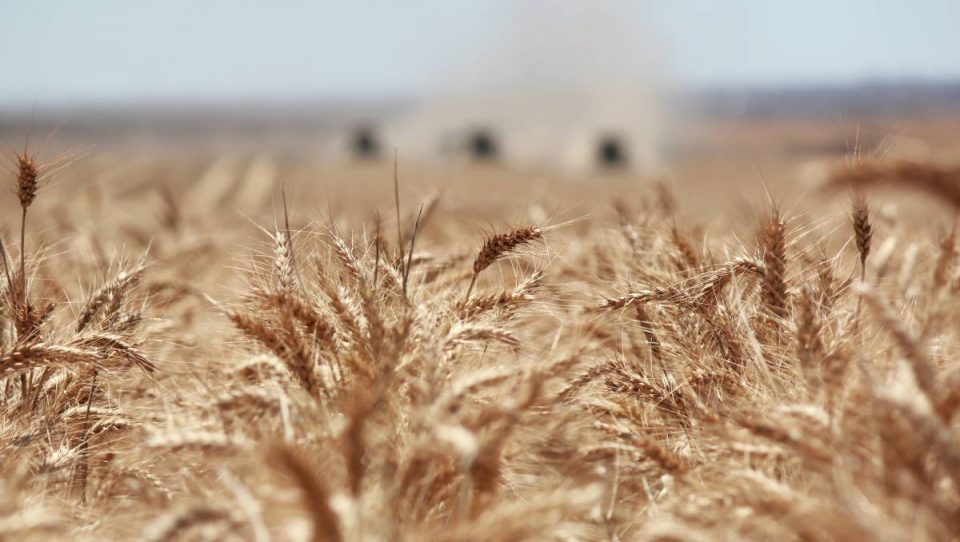
Global wheat production and consumption estimates for the 2020-21 season were updated by the United States Department of Agriculture (USDA) last week – and the changes were broadly in line with market expectations.
The USDA reduced its total grain production forecasts, as smaller crops in the European Union, Kazakhstan, Argentina and Turkey more than offset larger crops in Russia and Ukraine.
Global consumption estimates were lowered, mainly due to feed and residual use for the European Union.
Exports were raised for Russia, Ukraine, and the US – but reduced for the European Union.
The biggest mover on the import side of the global equation was Pakistan, after production from its recently completed harvest fell short of expectations.
The USDA increased import estimates from 0.01 million tonnes to 1 million tonnes, but further increases are expected if recent reports out of Pakistan prove correct.
The Pakistan government estimates final wheat production ended up at 25.5 million tonnes, which is slightly above the five-year average of 25.3 million tonnes. That represented a 1.2 million tonnes increase on the 24.3 million tonnes harvested in 2019, but was well short of the government’s target of 27 million tonnes.
Wheat is one of the four main crops in Pakistan – alongside rice, cotton, and sugarcane – and is grown during the ‘Rabi’ (or winter) season by about 80 per cent of the country’s farmers.
The planting season commenced on time in October last year, and the area planted was expected to be 9.2 million hectares – about 40 per cent of the country’s arable area.
But soaring costs of production and a low government support price discouraged some farmers from planting, and the area finished up at around 8.5 million hectares.
Early crop development was excellent on the back of favourable weather conditions. But heavy rains and localised hail over areas of the leading wheat-producing province of Punjab in March and April delayed harvesting operations and caused localised damage to standing crops.
Wheat is an essential crop in Pakistan, as flour is a food staple.
The government there has supposedly been storing surplus wheat since 2010.
Yet, with the harvest season concluding less than three months ago, it is already hard to find wheat offered on the open market at the government’s fixed price – and flour is also being sold at inflated prices.
The USDA pegged domestic consumption at about 25.6 million tonnes, but according to the country’s Ministry of National Food Security and Research, the country’s annual wheat requirement is 27.5 million tonnes.
With low carryover stocks from last season, and the lower than expected production, the balance sheet is now in deficit.
About 60 per cent of Pakistan’s total wheat production is retained on-farm for village and household food consumption and for seed.
The government typically buys about 25-30 per cent at harvest, driven by both food security and market intervention reasons. The private sector purchases the balance.
Back in May 2020, a report surfaced that Pakistan would need to import 100,000 to 200,000 tonnes of wheat every month until April next year to control price hikes in the domestic market – as local production was not sufficient to stabilise grain supplies.
Also, 1 million tonnes of strategic reserves or buffer stocks would be required to control price rises.
Some domestic millers are saying that the 2020 harvest was smaller than official estimates and the nation is on course for a 3.5 million tonnes deficit.
Yet, private merchants were actually exporting wheat from Pakistan to neighboring countries immediately after harvest.
A poor government procurement program and corruption, within both the government and the domestic milling industry, is a huge issue.
One government official recently told the parliament that 6 million tonnes of wheat had vanished from the market since harvest. If accurate, the shortage could result in severe food shortages during the upcoming winter.
Prime Minister Imran Khan’s government said it plans to meet the shortfall through imports and early release of buffer stocks.
At the end of June, Khan’s cabinet approved the import of 2.5 million tonnes of wheat.
But the shipments did not immediately materialise as the private sector shied away and the selling price fixed by the government was lower than the cost of the imported wheat.
To bridge the difference, the Ministry of Food Security has abolished the duty on wheat imports for the private sector – stating that the 60 per cent regulatory duty and 11 per cent customs duty will not be levied.
Also, the 17 per cent general sales tax and a 6 per cent withholding tax will not be collected – and the imported wheat has also been exempted from the Anti-Hoarding Act imposed by the provincial governments.
By the end of July, orders had already been placed by private merchants to import 300,000 tonnes of wheat, which will reportedly be shipped out of the Black Sea region during the August and September period.
Purchases in the first two weeks of August total 120,000 tonnes – the latest being 60,000 tonnes booked late last week at US$227/tonne (cost and freight) for September shipment, again out of Black Sea ports.
In addition, submissions close on August 18 for the Pakistan government tender announced earlier in the month.
The international tender to buy and import 1.5 million tonnes of wheat was issued by the Trading Corporation of Pakistan, which operates under Pakistan’s Ministry of Commerce.
The wheat can be sourced from worldwide origins and offers are sought – including cost and freight to the port of Karachi. Offers must be for a minimum of 200,000 tonnes.
When the imported wheat hits the market, the artificial shortage will theoretically be filled, and the price of wheat and flour should revert to the government0set prices.
But the hands of corruption are quite extensive in Pakistan, and there are no guarantees that all of the imported wheat will be immediately available to the market.
The Pakistan tender was intentionally timed to coincide with the Black Sea harvest, and it is unlikely that Australian wheat will be competitive.
Assuming the tender is fully subscribed, that is almost 2 million tonnes of unforeseen demand for Black Sea wheat in the second half of 2020.
And that may not be the end of Pakistan’s import requirements.
The smaller EU crop and unexpected Pakistan demand is excellent news for the Australian farmer.
This means there will be less Black Sea wheat to compete with domestic exports into traditional Asian markets in the first half of 2021.
The story USDA sheds light on world’s crops and stocks first appeared on Farm Online.
