

The European Commission on Monday (19 September) proposed introducing a Single Market Emergency Instrument (SMEI) to secure critical supply chains in times of crisis.
However, difficult trade-offs lie ahead, as the EU seeks powers to govern supply chains, which were heavily disrupted by the COVID-19 pandemic two years ago.
The SMEI would give the Commission the power to monitor critical supply chains as well as recommending the creation of strategic reserves of certain components.
In emergency situations, the EU executive could request sensitive business information from companies and even make them prioritise orders to guarantee that products get to where they are needed most urgently from a European perspective.
Beware of the Permacrisis
Moreover, the SMEI aims at suppressing intra-EU barriers to the free movement of goods, services, and workers within the single market during a crisis. The move is aimed at preventing scenes like the border closures that were seen early in the COVID-19 pandemic.
In another learning from the pandemic, the SMEI would also make it easier for the Commission to organise the public procurement of crisis-relevant goods on a European level so that national governments do not push the prices up in an attempt to outbid each other.

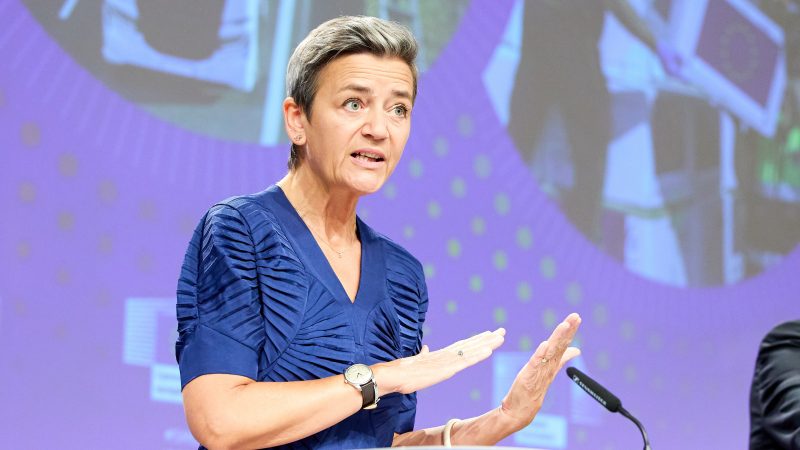
“We must make our Single Market operational at all times, including in times of crisis,” the EU Commission’s Executive Vice-President Margrethe Vestager said at a press conference on Monday.
“We need new tools that allow us to react fast and collectively,” she added.
Internal market Commissioner Thierry Breton warned of a “permacrisis”, as more and more extreme situations like wars or climate-related disasters might endanger the integrity of the Single Market.
“Rather than relying on ad hoc improvised actions, the Single Market Emergency Instrument will provide a structural answer to preserve the free movement of goods, people, and services in adverse times,” he said.
Understanding supply chains as public infrastructure
According to Klaas Hendrik Eller, assistant professor at the Amsterdam Center for Transformative Private Law specialising in the legal governance of global supply chains, “the SMEI is a state of emergency regulation for the 21st century.”
“Supply chains used to be a mysteriously complex assemblage of private companies, composed in a way to maximise efficiency,” he told EURACTIV, explaining the common way to look at supply chains until recently.
However, he argued that this rationale no longer shields supply chains from public intervention.
“Supply chains are closely connected to public interests, both on the consumer side and on the labor side, and thus amount to a sort of public infrastructure,” he said.
Companies, for their part, are wary about a shift in how supply chains are governed.
Eurochambres, the association of European chambers of commerce, warned that some of the measures in the SMEI could constitute regulatory overreach and that companies should only be invited to provide information to the Commission on a voluntary basis.
Orders from Brussels?
Niclas Poitiers, a research fellow at the Bruegel economic think tank in Brussels, criticised the SMEI on a more fundamental level.
“The SMEI might have been conceived as a paradigm shift,” he told EURACTIV, before arguing that it was, however, more likely to be a political signal by the Commission that it was taking the supply chain issues seriously.
“It is an illusion that the Commission could direct complex supply chains from their offices in Brussels,” he said.
Asked by journalists whether this new instrument could lead to a more planned economy, Commissioners Breton and Vestager both vehemently denied.
“This is everything but a planned economy. This is to make the market work,” Vestager replied.
Bruegel’s Poitiers also criticised the Commission’s power to make companies prioritise orders. “Every intervention in the prioritisation of orders also deprioritises someone else’s order. What is the justification in doing this?” he questioned.
Not without the member states
Meanwhile, Commissioner Breton argued that the SMEI was much less coercive than similar tools in other countries, citing the “Defense Production Act” in the US which forced companies to produce ventilators during the first wave of the COVID-19 pandemic.
Moreover, the regulation would only allow the Commission to take the more coercive measures if EU countries decide to declare a “single market emergency”, a move that would require a qualified majority in the Council of the EU.
Nevertheless, member states will be vigilant in the negotiation process that is now lying ahead.
“Proportionality is important. We will take a close look at the definitions and at when the mechanism can be triggered,” an EU diplomat of one member state told EURACTIV.
Already in June, a coalition of nine small and mid-sized EU member states sent a letter to Brussels cautioning the Commission not to overact or try “steering” industries.
Sustainability versus Emergency
While the member states will have an influential voice in shaping this regulation in the coming months, another trade-off in this regulation might more easily be overlooked.
“The SMEI has a very Eurocentric approach,” Klaas Hendrik Eller told EURACTIV. With the regulation’s singular focus on making sure that strategically important goods are sufficiently available in the single market, other interests risk falling by the wayside.
This could pit the SMEI against other legislative proposals related to supply chains that are currently being negotiated in the EU institutions.
“There is a tension with other EU proposals like the Sustainability Due Diligence Directive that aims at making supply chains more socially and environmentally responsible,” Eller said.
While Commissioner Breton assured journalists that the SMEI and the due diligence were completely compatible, Eller questioned whether this would also apply in practice.
“Technically, the SMEI does not overrule the due diligence provisions, but when push comes to shove sustainability criteria might be deprioritised,” he warned.
[Edited by Frédéric Simon]
