

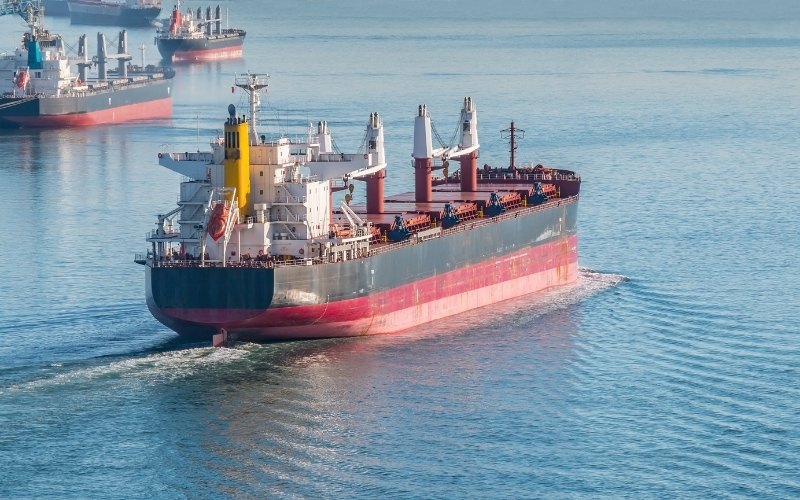
DETROIT – Breakbulk is a term used in shipping to describe loading and unloading cargo that is not containerized. This type of cargo is usually large and bulky and is loaded and unloaded by crane or other heavy machinery. Breakbulk shipping is often used for vehicles, construction equipment, and agricultural products.
Breakbulk shipping is most commonly used in cases where large quantities of cargo need to be transported or when the cargo is too large or irregular to fit into a container. Several shipping companies specialize in breakbulk transportation, and many ports worldwide are specifically equipped to handle this type of cargo.
The breakbulk process begins with loading the cargo onto trucks or railcars. These vehicles then travel to the port, where the cargo is unloaded and placed onboard a ship. The ship takes the cargo to its destination, unloading and delivering to the customer.
What are the differences between breakbulk shipping and bulk shipping?
What is shipped
Bulk shipping generally describes the loose transportation of cargo, such as grain, coal, or oil. This type of cargo is typically transported in large vessels known as bulk carriers. Breakbulk shipping usually involves transporting cargo that is not loose and is often loaded onto ships using cranes or other heavy machinery.
Design of the vessels
Bulk carriers are specifically designed to transport large quantities of loose cargo and are equipped with unique features such as holds that they can empty quickly. Breakbulk vessels are not necessarily designed to transport large quantities of cargo and may not have the same type of holds, for example, LCL trucking.
Loading and unloading
The loading and unloading of bulk cargo is relatively simple, as the cargo is loose and can be easily poured into the vessel’s holds. The loading and unloading of breakbulk cargo is much more complicated, as the cargo often needs to be lifted by a crane or other heavy machinery.
Transportation time
Bulk shipments generally take longer to transport than breakbulk shipments, as bulk vessels travel at slower speeds. Bulk vessels are designed to carry large quantities of cargo and thus need to make fewer stops. Breakbulk vessels may make more stops along the way, but they usually travel at faster speeds.
Costs
Bulk shipping is generally more expensive than breakbulk shipping, as it requires unique vessels and equipment. Breakbulk shipping is often less expensive, as it does not require the same type of specialized vessels and equipment.
Efficiency
Bulk shipping is generally more efficient than breakbulk shipping, as bulk vessels can carry large quantities of cargo in a single trip. Breakbulk ships often need to make multiple trips to transport the same amount of cargo, which can be costly and time-consuming.
Risk
Bulk shipments are often considered riskier than breakbulk shipments, as there is a greater chance that the cargo will be damaged or lost during transport. Bulk shipments are often made over long distances and may pass through rough waters. Breakbulk shipments are less likely to be damaged or lost, as they are generally transported shorter distances and do not pass through as many dangerous areas.
Environmental impact
Bulk shipping generally has a more significant environmental impact than breakbulk shipping, as bulk vessels release more emissions. Breakbulk vessels usually have a minor environmental impact, as they emit fewer emissions and often use cleaner fuel sources.
What are the risks of breakbulk shipping?
Regulation
Breakbulk shipping is often less regulated than bulk shipping, as it does not require the same type of specialized vessels and equipment. It can be dangerous, as breakbulk shipments may not meet all safety standards.
Damage
There is a greater chance of damage occurring during breakbulk shipping than during bulk shipping. Breakbulk cargo is often loaded and unloaded using cranes or other heavy machinery.
Theft
Hackers often target breakbulk shipments, as there is a greater chance of stealing valuable cargo. Bulk shipments are less likely to be targeted by thieves, as the cargo is not as valuable.
This article was provided by Suman Kabeer
