

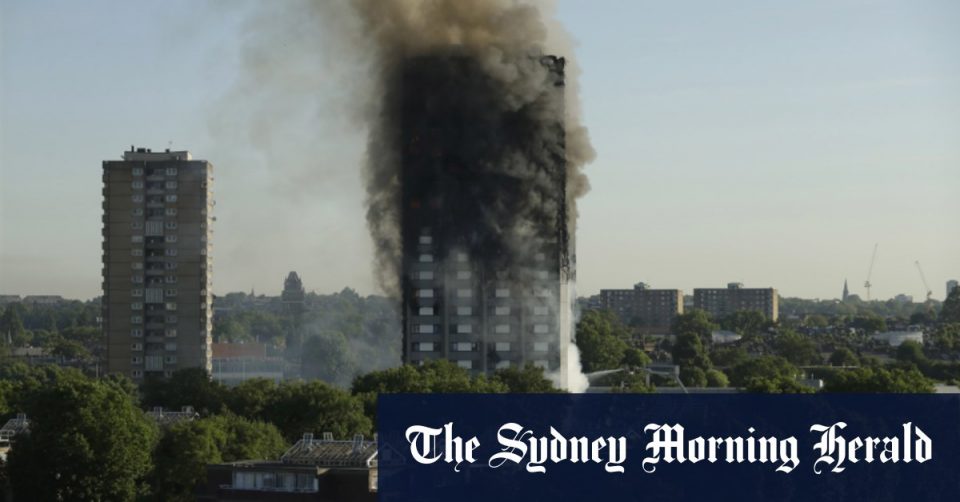
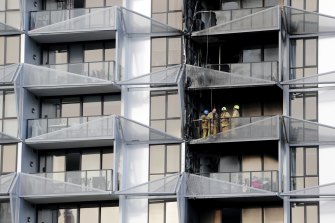
A tribunal earlier this year found the consultant building surveyor, fire engineer and architect bore more liability for the use of combustible cladding on Melbourne’s Lacrosse Tower than the builder. Credit:Wayne Taylor
Responding to Grenfell, the government launched a 10-point plan to identify high-risk buildings in NSW and formed the taskforce led by the Department of Customer Service.
Since then, around 50 per cent of government-owned buildings and almost 90 per cent of Department of Planning and Environment buildings have been cleared or cladding remediation is underway.
However, the auditor-general found information management by the government’s taskforce was inadequate in reliably tracking all buildings through the process, recommending improvements to accuracy by December this year.
Crawford also said there had been no enforcement of a ban on cladding with more than 30 per cent polyethylene content since it was introduced in 2018. Her recommendations include tightening the ban by October.
In a statement Minister for Fair Trading Eleni Petinos said she had asked the cladding taskforce to “make the recommended improvements, where possible”.
Opposition spokeswoman for innovation and better regulations Courtney Houssos said the audit showed the cladding response had been “slow and haphazard.“
Loading
“No work has been done on those buildings that were identified as low risk. This is just another symptom of the government’s failure to have a comprehensive and coordinated response,” she said.
“There’s been problems with providing apartment owners with certainty about what actually needs to be remediated right from the very beginning”.
Chris Duggan, president of peak body Strata Community Australia, said the government response to cladding had initially been a “scatter gun approach”, but that remaining gaps needed to be addressed.
“For high-risk buildings in the beginning it was obviously about prioritising rectification. But clearly stage two now is to make sure lower risk building don’t get left behind.”
In November 2020, the state government announced a three-year remediation program for high-risk apartment owners forced to replace flammable cladding, offering interest-free loans under the $1 billion program.
Duggan said the government should consider whether the program could be expanded to include owners in low-risk buildings.
Owner’s Corporation Network spokesman Stephen Goddard said he believed the government had been “less than energetic” in enforcing the removal of cladding because of the exorbitant cost.
“Owners corporations are not seeking a free ride, but this threat to life safety has been thrust on them. Nobody knew cladding was flammable at the time of installation, that must be acknowledged. But the fact remains it is a flammable product, and it has to be removed.”
The Morning Edition newsletter is our guide to the day’s most important and interesting stories, analysis and insights. Sign up here.
